

Hydrometallurgical Battery Recycling

The Recycling Imperative
The global boom in electric vehicles and renewable energy storage is straining supply chains for critical raw materials such as lithium, cobalt, and nickel. Mining new resources is costly, environmentally intensive, and often geopolitically complex. Recycling spent batteries is no longer optional: it is essential for ensuring long-term supply security, lowering carbon footprints, and meeting global sustainability targets.
Hydrometallurgical battery recycling has emerged as one of the most effective methods for recovering high-purity metals from end-of-life batteries. Unlike pyrometallurgy—which requires high temperatures and produces significant emissions—hydrometallurgy uses chemical processes at lower energy inputs, making it more sustainable and more compatible with the circular economy.
The Hydrometallurgical Battery Recycling Process Explained
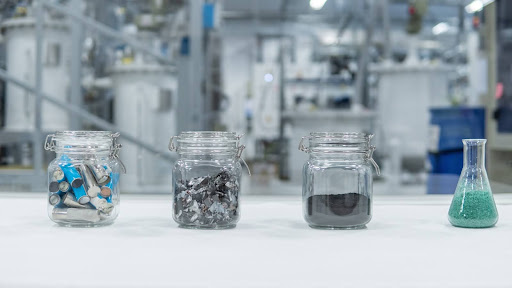
The hydrometallurgical process breaks down lithium-ion batteries into reusable components through a sequence of chemical and mechanical steps:
- Battery Disassembly & Shredding
- Spent batteries are safely discharged and mechanically shredded.
- This produces a mixed material feedstock, often called “black mass,” containing valuable metals, graphite, and residual electrolytes.
- Acid Dissolution → Slurry Formation
- The black mass is dissolved in strong acids (commonly sulfuric or hydrochloric acid).
- Metals are released into solution, while insoluble materials remain as slurry.
- Impurity Separation (Graphite, Aluminum, Plastics)
- Non-valuable fractions such as aluminum foil, graphite, and plastics must be filtered out.
- Removing these impurities is critical to preventing blockages in downstream recovery steps.
- Precipitation of Metals (Nickel, Cobalt, Lithium)
- Target metals are recovered by adjusting the solution chemistry.
- Precipitated metal salts are then filtered, dried, and refined into new battery-grade materials.
Common Challenges in Hydrometallurgical Battery Recycling
Despite its advantages, hydrometallurgy poses several process engineering challenges:
- Handling Corrosive Solutions
The acid leaching stage involves aggressive chemicals that can corrode conventional equipment. - Preventing Blockages
Graphite, aluminum, and other insoluble fractions can clog filters and reduce system efficiency if not removed effectively. - Achieving High Recovery Rates
Filtration must separate valuable precipitated metals cleanly, without excessive chemical use or product loss.
BHS Filtration in Action
BHS filtration systems are specifically engineered to solve these process challenges.
- Removal of Graphite & Aluminum After Acid Dissolution
BHS continuous belt filters separate insoluble impurities efficiently, ensuring clean leach solutions for downstream recovery. - Filtering Precipitated Metals from Corrosive Solutions
During the chemical precipitation step, BHS filters recover nickel, cobalt, and lithium salts while withstanding corrosive process conditions. - Outperforming Batch Systems
Unlike batch-based filters, BHS continuous systems handle high throughputs with fewer interruptions, improving both efficiency and consistency.
Advantages of BHS Solutions
BHS filtration equipment delivers measurable benefits for hydrometallurgical battery recycling operations:
- Corrosion-Resistant Polymers
Filters are constructed from advanced polymer materials, such as polypropylene or polyethylene to resist acid attack and ensure long service life. - Continuous, Automated Operation
Reduces downtime, exposure risk and labor requirements compared to manual, batch-operated systems. - Countercurrent Washing
Ensures efficient separation of metals from impurities while minimizing water consumption—supporting both process yield and sustainability goals. The configuration of the filter maximizes wash efficiency. Wash is distributed evenly and performance matches the optimal theoretical wash ratio.
As the world accelerates toward electrification, hydrometallurgical battery recycling offers a scalable, sustainable way to recover critical raw materials. To meet the dual challenges of purity and efficiency, recycling facilities need filtration systems capable of handling corrosive environments, preventing bottlenecks, and maximizing yield.
With its continuous belt filters, corrosion-resistant designs, and water-efficient washing technologies, BHS Filtration provides process engineers with the tools to make battery recycling plants more productive, sustainable, and cost-effective.
See how our belt filters enable hydrometallurgical recycling plants worldwide.