

When to Convert from Batch to Continuous Filtration, and How to Do It Right
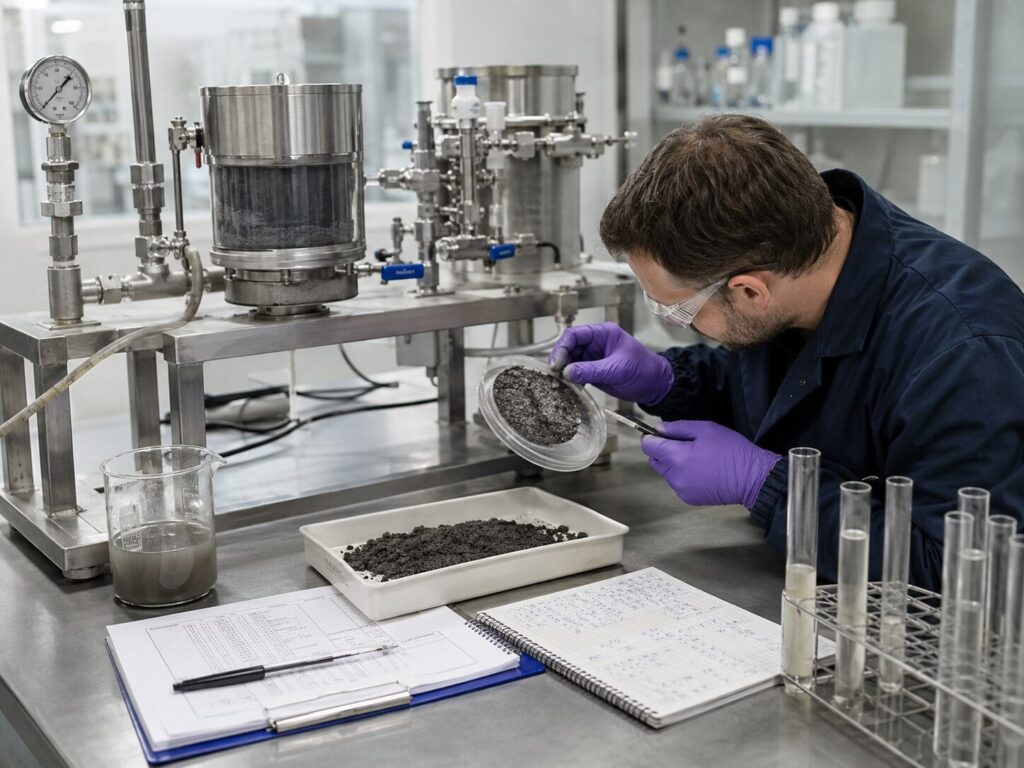
Batch filtration works until it becomes the bottleneck. For chemical and pharmaceutical plants running multiple filtration cycles per shift, the economics of continuous filtration shift significantly as throughput demands grow. Cycle times stretch. Downstream operations wait on discharge. Wash efficiency erodes. What began as a practical choice gradually becomes the ceiling on production capacity.
The signals that indicate a conversion is warranted rarely arrive all at once. Cycle time pressure, footprint constraints, rising labor intensity, and inconsistent cake quality build separately and then compound. By the time a formal evaluation is triggered, the cost of staying with batch filtration is often already documented in the operating data.
This post covers what those signals look like in practice, how continuous solid-liquid separation compares to a batch press as throughput scales, and what process engineers should evaluate before committing to a technology change.
Why Batch Filtration Becomes a Bottleneck
A batch filter does not produce output continuously. It fills, filters, washes, discharges, and resets before the next cycle begins. At low throughput, the intervals between discharges are manageable. As throughput scales, those intervals become a structural constraint.
Each time a batch filter cycles through discharge, the filtration cycle stops. Downstream operations that depend on a steady supply of filtered solids or clarified liquids are left waiting. For continuous production environments, this creates rhythm problems that compound over time, accumulating into missed targets and unplanned holds.
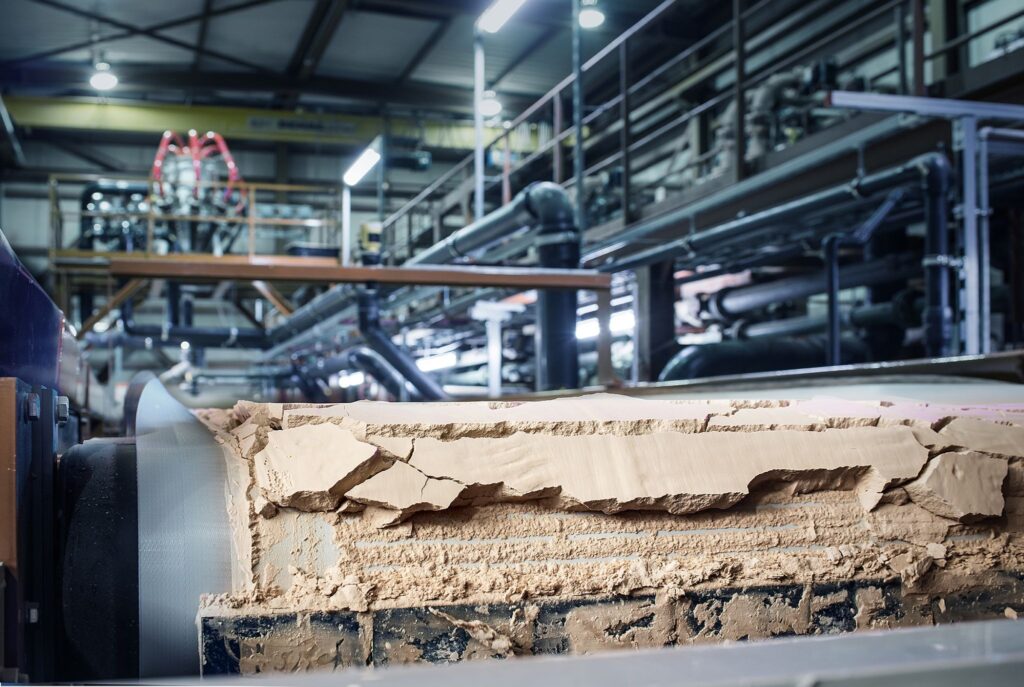
Filter presses, in particular, are batch filters built around thick-cake formation, typically 25 to 50 mm per cycle. Thick cakes require more time to drain, more pressure to wash, and more handling on discharge. As throughput grows, the filtration cycle can stretch to the point where the filter itself becomes the production ceiling.
Operational Signals That Indicate a Conversion Is Warranted
There is rarely a single moment that triggers a batch-to-continuous evaluation. A pattern of operational friction builds until it becomes too costly to ignore. The following signals are worth tracking:
Cycle time pressure. If the batch filter is operating at maximum cycle length and throughput is still constrained, there is no room to grow within the batch model. Adding filter press capacity adds footprint and capital, but it does not change the fundamental cycle limitation.
Footprint constraints. A batch filter press must hold enough filter area to produce an adequate volume per discharge. Scaling up means adding plates and volume, and eventually a second unit. A continuous system produces constant output from a significantly smaller footprint. In one validated installation, a 12 m² continuous vacuum belt filter replaced a 440 m² batch filter press with matched throughput.
Labor intensity. Batch presses require operator attention at discharge, cloth inspection, and re-clothing. For hazardous materials, re-clothing can require full enclosure suits and significant preparation and cooling time. Continuous systems reduce operator intervention by design.
Cake consistency issues. Batch press cakes can vary plate-to-plate and within a single plate. For processes where final product quality depends on consistent moisture content or residual impurity levels, that variability is a product quality risk. The continuous filtration process produces a constant cake structure and a steady filtrate stream, regardless of cycle stage.
Wash efficiency losses. Batch filter presses wash from both sides of the cake simultaneously, which increases required wash volume by a factor of three to four compared to single-sided filtration. Counter-current washing is largely impractical in a batch press. If wash fluid consumption or wash cycle length is growing as a cost center, this is a clear signal that the current equipment is not well-matched to the process.
How the Economics Shift as Throughput Grows
The conventional assumption is that a filter press offers more filter area per unit cost. That assumption holds when filtration cycles are short and cakes discharge cleanly. It breaks down when cycle times stretch, wash volumes increase, and labor and maintenance costs accumulate.
A straightforward comparison illustrates why: a small continuous vacuum belt filter operating on the same material as a batch press can match throughput with a fraction of the filter area, because it produces output continuously rather than in discrete batches. The apparent advantage of a larger filter area disappears when cycle time is factored into the productivity calculation.
For plants running multiple filtration cycles per shift on the same material, the economics of a continuous solid-liquid separation system become increasingly favorable as throughput grows. The crossover point depends on slurry characteristics, wash requirements, and current operational costs. The analysis is worth performing once batch filtration bottleneck symptoms begin appearing consistently.
What Process Engineers Should Evaluate Before Committing
A batch-to-continuous conversion is a capital decision and a process change simultaneously. Rushing the evaluation is the primary risk. Before selecting a continuous system, process engineers should work through the following:
Slurry characteristics. Particle size distribution, solids concentration, and cake compressibility all affect whether vacuum or pressure filtration is appropriate. High-solids slurries, up to 50 to 55 percent solids, can often be handled by a continuous-indexing vacuum belt filter. Applications requiring higher operating pressure may be better suited to a rotary pressure filter vs. batch alternatives.
Washing requirements. Continuous systems support multiple wash stages, counter-current washing, and solvent exchange within a single unit. Understanding wash ratios and product purity requirements upfront informs zone configuration and filter sizing.
Drying requirements. Cake moisture targets determine whether vacuum drying, gas blowing, or mechanical pressing is needed and how the filter zones should be arranged.
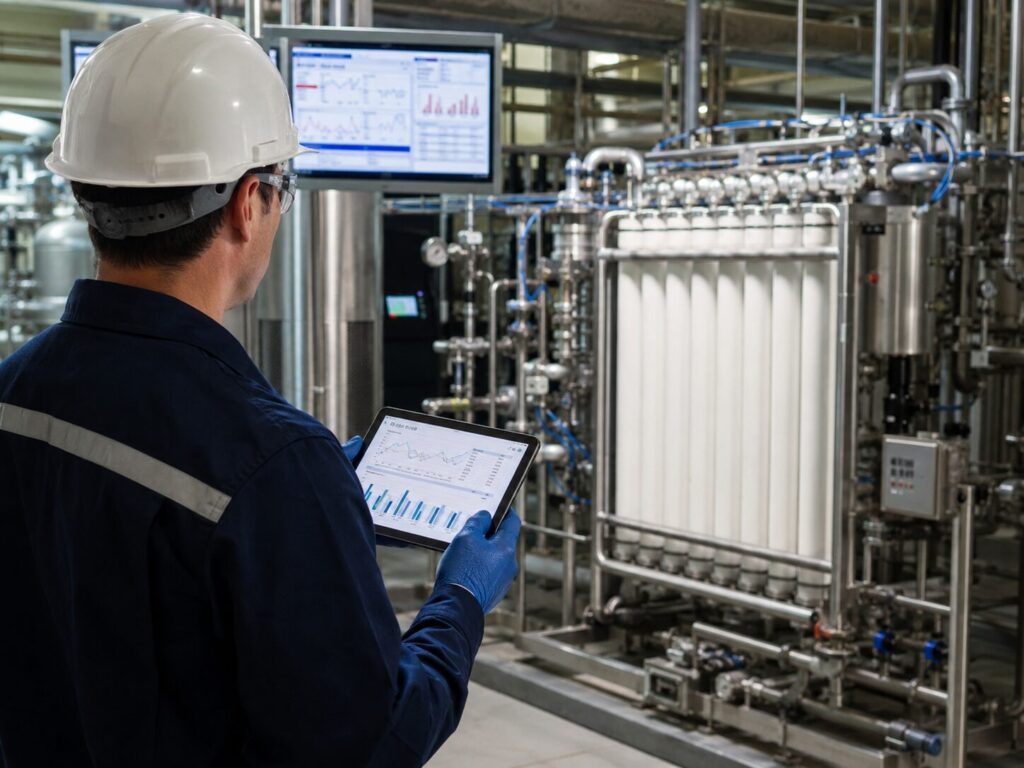
Scale-up data from bench testing. No continuous system should be specified without laboratory or pilot test data from the actual process slurry. Filter selection based on assumed performance is one of the most reliable paths to a capital project that underperforms at commissioning. Bench-scale testing on the actual material determines the correct filter media, cycle time, wash ratios, and drying parameters before capital is committed.
How BHS Supports the Batch-to-Continuous Transition
BHS Filtration designs and builds continuous solid-liquid separation systems for chemical, pharmaceutical, and industrial process applications. Two technologies are most commonly applied in batch-to-continuous conversions:
The Rotary Pressure Filter (RPF) is engineered for high-solids slurries requiring thin-cake, continuous production under pressure up to 90 psig. It supports positive displacement washing, counter-current washing, solvent exchange, steaming, extraction, and cake drying within a single enclosed unit. Each process zone, typically five to seven, operates at independently adjustable pressure. The RPF is well-suited for pharmaceutical and specialty chemical applications where containment, solvent recovery, and consistent product quality are priorities.
The Continuous-Indexing Vacuum Belt Filter (CI-VBF) is designed for applications where horizontal cake structure, multiple wash stages, and high wash efficiency are the primary requirements. Fixed vacuum trays and a pneumatically indexed belt eliminate the rubber carrier belts and moving tray hardware found in conventional belt filter designs. Its plug-flow wash mechanism achieves high displacement efficiency, and fixed tray design allows mother liquor and wash filtrates to be recovered separately and recirculated.
Both technologies are supported by BHS’s process development lab in Charlotte, North Carolina, where bench-scale and pilot testing validate performance on the actual process slurry before capital is committed. All testing produces a written test report with scale-up recommendations.
The Case for Conversion Is Already in Your Operating Data
If batch filtration is creating a measurable constraint, the evidence is already present. It is in cycle time logs, wash fluid consumption records, product quality variance data, and maintenance schedules. A batch-to-continuous evaluation does not start with selecting new equipment. It starts with a clear process description and a bench-scale test on the actual slurry.
BHS has supported batch-to-continuous conversions across chemical, pharmaceutical, and specialty process industries. The process starts with a technical conversation and the data to support it.
Contact BHS to discuss your batch-to-continuous evaluation, or submit an Application Data Sheet to begin the technical assessment of your specific process.