

Filtration Technologies in Plant-Based Food Products: From Fermentation Broth to Finished Ingredients
Why Filtration Matters for Plant-Based Food Products
Plant-based food products are no longer a niche. From meat alternatives and fortified beverages to fermentation-derived sweeteners and flavors, manufacturers are racing to scale new product lines while maintaining strict food safety and quality targets.
Modern plant-based applications include:
- Fermentation-derived sweeteners and flavors (e.g., stevia derivatives, vanillin, flavor enhancers).
- Organic acids and bio-based solvents used as food ingredients or processing aids.
- Protein-rich biomass and mycoprotein for meat analogues.
- Biopolymers and functional fibers that improve texture or stability.
What all of these plant-based products have in common is a reliance on bioprocessing and fermentation and the need to separate, wash, and dewater solids efficiently once the reaction is complete. After fermentation, the broth in the bioreactor contains cells, residual biomass, product, and impurities suspended in liquid. Before formulators ever see a powder, concentrate, or slurry, solid-liquid separation (SLS) does the heavy lifting.
Downstream processing is everything that happens after fermentation to recover, purify, and finish the product and can account for 50–80% of total production costs in biomanufacturing. Optimizing filtration, washing, and dewatering is therefore critical for plant-based food producers looking to improve margins and bring new products to market faster.
Why Downstream Solid-Liquid Separation Is So Critical
Cost and throughput
Because downstream operations can dominate operating costs, even modest improvements in filtration efficiency and washing can have an outsized financial impact. Efficient filtration helps:
- Increase yield by capturing more of the target solids or dissolved product.
- Reduce solvent and water usage through optimized washing strategies.
- Shorten cycle times and enable continuous rather than batch operation.
In continuous bioprocesses, poorly designed SLS can become the bottleneck that limits overall plant capacity.
Product quality: off-flavor, color, and impurities
For plant-based food products, sensory quality is just as important as yield. Plant proteins and fermentation-derived ingredients often carry inherent off-flavors, green, beany, bitter, or astringent notes, from lipids, aldehydes, and other volatiles formed during processing.
Filtration with integrated cake washing can:
- Remove flavor-active by-products and degradants.
- Strip unwanted pigments that cause dark or unstable color.
- Reduce residual catalysts, microorganisms, or insoluble fines that would otherwise affect safety or stability.
Research shows that optimized washing and fermentation steps, often using ethanol or controlled lactic acid fermentation, can significantly reduce off-flavor compounds in plant protein isolates. Robust filtration hardware is what makes those process strategies practical at scale.
Regulatory and safety expectations
Plant-based foods are still food. Systems must comply with GMP (Good Manufacturing Practice) and food-safety regulations:
- Materials of construction must be compatible with the product and cleaning media and must not leach contaminants.
- Equipment must be hygienic by design: smooth surfaces, minimal dead legs, and easy accessibility for cleaning and inspection.
- When flammable solvents such as ethanol are used during washing, filtration systems must be suitable for hazardous areas (e.g., Class I, Division 1), with proper containment and inerting to protect both operators and product.
These requirements strongly influence which filtration technology is appropriate and how it is implemented.
Where Filtration Fits in Plant-Based Food Products
Different categories of plant-based food products place different demands on the filtration step.
Plant protein concentrates and isolates
Pea, soy, fava, rice, and other plant proteins are often precipitated or separated from aqueous slurries after extraction, pH adjustment, or fermentation.
Filtration objectives:
- Separate protein curds or precipitated solids from mother liquor.
- Wash out soluble sugars, salts, and flavor compounds.
- Dewater to a filtercake or concentrated slurry suitable for drying, extrusion, or blending.
High washing efficiency and consistent cake moisture directly influence:
- Off-flavor levels.
- Color and turbidity in final beverages or meat analogues.
- Energy required for downstream drying.
Fermentation-derived sweeteners, acids, and flavors
Here, the product may be:
- Primarily in the liquid phase, requiring efficient removal of biomass and fines (e.g., clarification before chromatography or evaporation).
- Primarily in the solid phase, where crystals or precipitate must be washed and dewatered (e.g., amino acids, organic acids).
Filtration solutions must handle:
- Variable solids loading.
- Viscous broths and foaming.
- Solvents and pH extremes used for crystallization or extraction.
Biomass-based ingredients and mycoproteins
For fungi- or algae-based ingredients, biomass itself is the product. Solid-liquid separation must:
- Recover fragile biomass with minimal shear.
- Deliver the right solids content for downstream texturizing or cooking.
- Allow effective washing to remove residual medium components.
Side streams, by-products, and water reuse
Filtration also supports valorization of side streams, including:
- Recovery of functional fibers or micronutrients from process residues.
- Purification and recycling of process water or solvents.
Choosing the right technology here can turn waste into sellable ingredients and reduce utility consumption.
Comparing Filtration Technologies for Plant-Based Processes
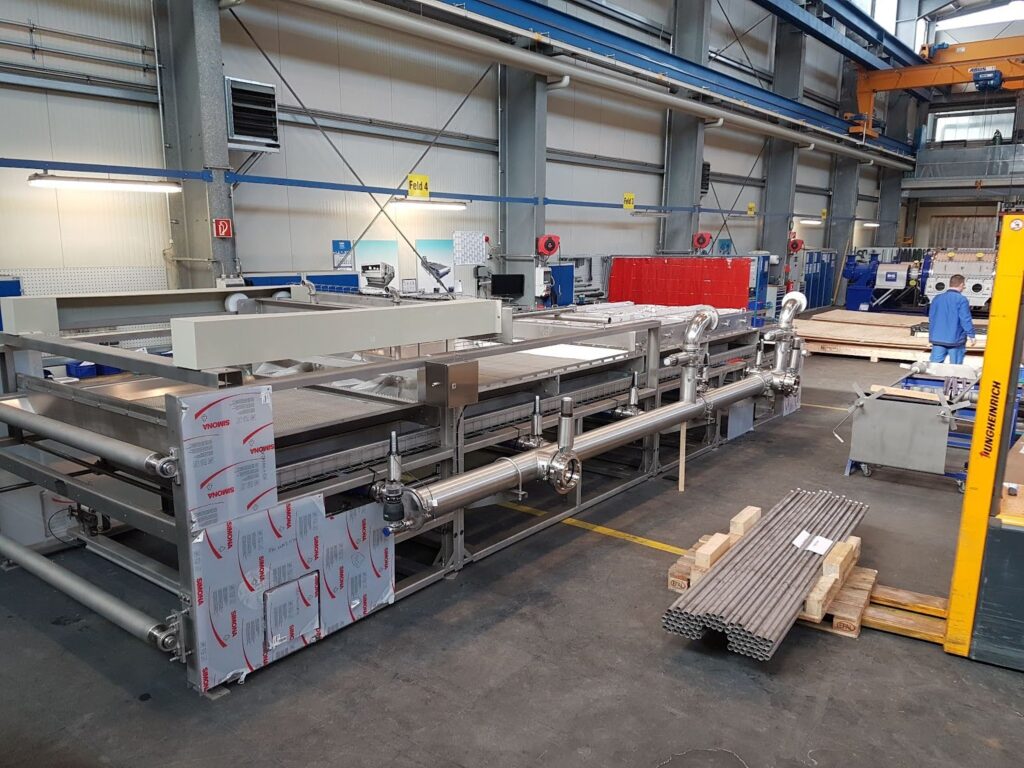
Manufacturers of plant-based food products have many solid-liquid separation options: centrifuges, filter presses, membrane systems, and more. BHS specializes in thin-cake pressure and vacuum filtration technologies that frequently outperform conventional batch equipment for these duties.
Rotary Pressure Filter (RPF) – Continuous pressure filtration
The BHS Rotary Pressure Filter is a fully enclosed, slowly rotating drum divided into cells. Each cell moves sequentially through zones for filtration, cake washing, dewatering, and discharge, under positive pressure.
For plant-based processes, RPFs are attractive when:
- Solids content is moderate-to-high and continuous operation is preferred over batch.
- Multiple washing stages are needed to strip sugars, salts, or off-flavor compounds.
- Flammable solvents (e.g., ethanol) or inert atmospheres are required.
Key benefits:
- High washing efficiency with plug-flow behavior.
- Small footprint compared to multiple batch units.
- Gas-tight, hygienic design that supports solvent handling and operator safety.
Continuous-Indexing Vacuum Belt Filter (BF)
In the continuous-indexing vacuum belt filter, the slurry is fed onto a horizontal belt over fixed vacuum trays. The belt moves in steps, giving time for filtration, washing, and drying while the belt is stationary.
Typical uses in plant-based food products:
- Large filtration areas for high-throughput protein slurries.
- Gentle cake handling for fibrous or fragile solids.
- Multi-stage counter-current washing to minimize water and solvent consumption.
Open or gas-tight designs allow adaptation to everything from aqueous protein slurries to solvent-based crystallization.
Candle Filters and Pressure Plate Filters
For low-solids broths or clarification duties, candle filters and pressure plate filters deliver thin-cake filtration in a closed, batch pressure vessel.
They are ideal when:
- The primary goal is clarification before concentration or chromatography.
- Very fine particles and colloids must be removed down to submicron levels.
- Automatic cake discharge and heel filtration are needed to maximize recovery.
In plant-based applications, these technologies can polish fermentation broths, strip color bodies, or protect downstream membranes and resins from fouling.
Design Considerations for Plant-Based Food Manufacturers
GMP and hygienic design
For plant-based food products, filtration equipment should be designed with:
- Food-grade materials (e.g., appropriate stainless steels, elastomers).
- Smooth, crevice-free surfaces and minimized dead legs to support CIP/SIP.
- Access for inspection, swab testing, and component replacement.
BHS filtration systems are engineered for hygienic processing, with options for full wash-in-place, steam sterilization, and integration into existing plant CIP circuits.
Solvent and hazardous-area handling
Where ethanol or other flammable media are used for extraction or washing:
- Filters must be gas-tight with appropriate seals.
- Venting, nitrogen inerting, and explosion-proof instrumentation must meet relevant electrical-classification standards (e.g., Class I, Division 1).
- Off-gas and vapor management must integrate with plant safety systems.
Continuous pressure and vacuum filters in fully enclosed designs help limit operator exposure and fugitive emissions.
Scalability: from lab to production
Successful filtration projects start in the lab and scale up methodically:
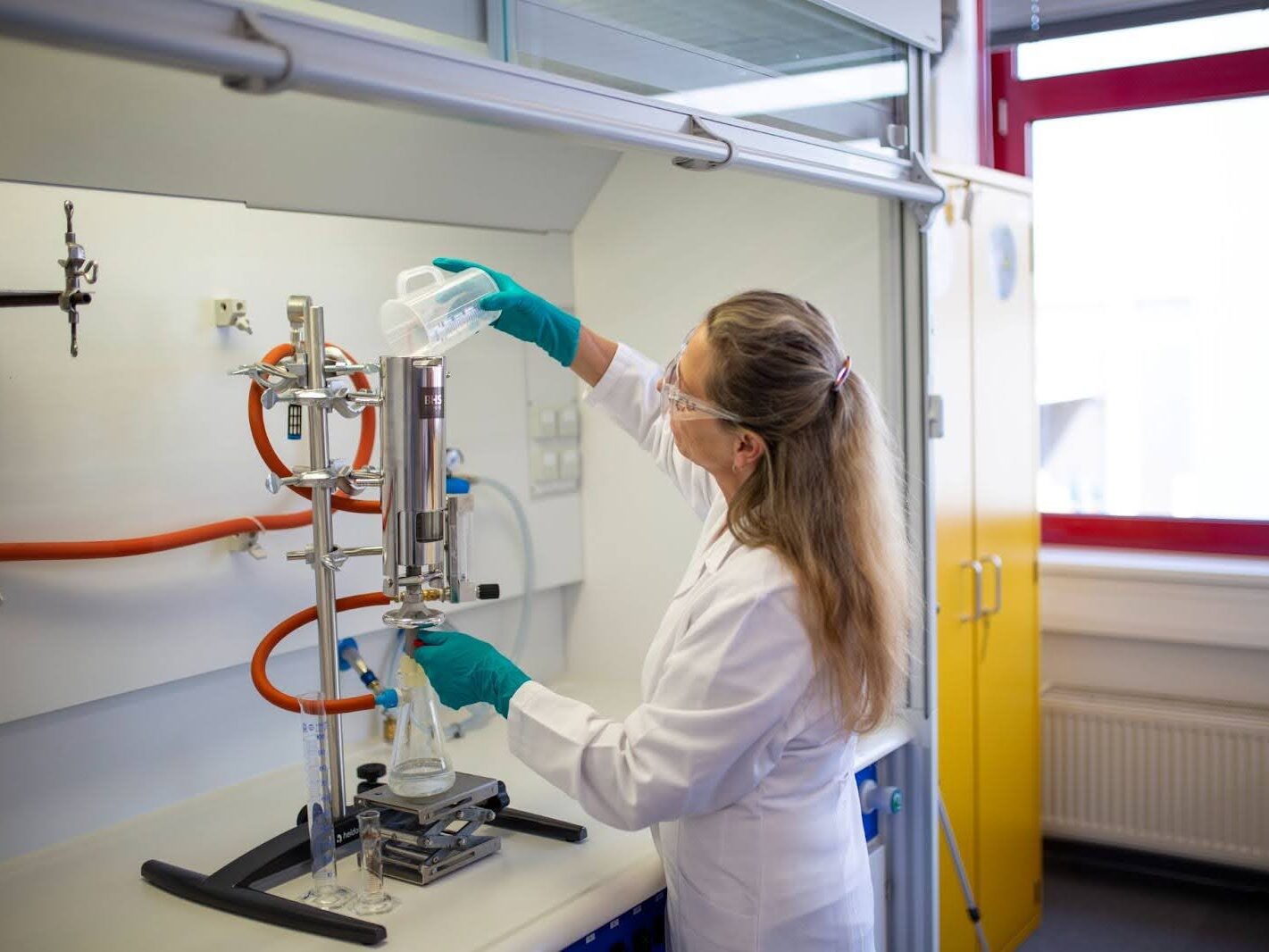
- 1. Bench-scale tests determine cake properties, filter media, washing behavior, and achievable throughput.
- 2. Pilot trials with rental filters validate scale-up parameters on real plant streams.
- 3. Full-scale design locks in equipment size, utilities, control philosophy, and integration with upstream and downstream unit operations.
BHS operates a filtration test lab in Charlotte, NC, complemented by a fleet of pilot and rental filters to support trials at customer sites.
Smart Questions to Ask When Evaluating Filtration for Plant-Based Food Products
Engineering and operations teams can de-risk investments by asking a few targeted questions:
- What is the dominant separation mechanism?
- Cake filtration, depth filtration, clarification, or dewatering?
- How do particle size distribution and compressibility affect equipment choice?
- How much washing is required?
- What impurity or off-flavor limits are acceptable?
- Can counter-current washing reduce solvent or water consumption?
- Is continuous operation beneficial?
- Are fermentation and downstream steps already continuous or moving in that direction?
- What are the labor and cleaning implications of multiple batch units vs. one continuous system?
- How will cleaning and changeover work?
- Can the filter be fully cleaned in place?
- How long is a typical cleaning cycle, and how does that affect uptime?
- What is the path from lab data to guaranteed performance?
- Are there established correlations between bench tests, pilot trials, and full-scale sizing?
- Will the supplier provide documented test reports and performance guarantees?
How BHS Filtration Supports Plant-Based Food Producers
BHS follows a Collaboration, Testing, Design, Support model that aligns closely with the needs of plant-based manufacturers.
- Collaboration:
BHS engineers start with the process challenge—off-flavor removal in a new plant protein, clarification of a fermentation-derived sweetener, or dewatering of mycoprotein biomass and review existing equipment, target specifications, and constraints.
- Testing:
Bench-scale and pilot tests using real product streams define filter media, cake thickness, washing strategy, and achievable throughput. Customers receive detailed test reports that form the basis for scale-up.
- Design:
The team designs filtration and washing systems, often rotary pressure filters or indexing belt filters, with appropriate materials, CIP/SIP systems, controls, and hazardous-area compliance. Integration with upstream fermentation and downstream drying or concentration is handled as part of a complete engineered solution.
- Support:
After commissioning, BHS provides ongoing service, spare-parts support, and process optimization, ensuring that filtration continues to meet yield, quality, and regulatory requirements as recipes and volumes evolve.
BHS already plays a pivotal role in established fermentation-based markets such as amino acids and is increasingly active in emerging segments like vegan meat and other plant-based food products, where reliable solid-liquid separation is mission-critical.
Plant-based food products depend on more than innovative recipes and high-performing strains. They rely on robust, hygienic solid-liquid separation to turn complex fermentation broths and plant slurries into clean, high-value ingredients.
By selecting the right filtration technology, whether continuous rotary pressure filters, indexing belt filters, or advanced candle and pressure plate systems, and by leveraging lab-to-plant testing, manufacturers can:
- Improve product quality and sensory performance.
- Reduce operating costs in a downstream step that often dominates total expenses.
- Build scalable, GMP-compliant processes ready for the next generation of plant-based foods.
BHS Filtration partners with producers at every stage of that journey, helping translate bioprocess innovation into commercially viable, repeatable manufacturing.