

A filter press isn’t wrong until the process outgrows it.
Cycle times keep stretching. Wash cycles run long and still miss the purity target. Adding capacity means adding more plates, then adding another unit entirely. Or a plant handling hazardous or high-value material can’t get a reliable containment guarantee out of a housing built from thousands of feet of gasketed seal.
None of that means the filter press was the wrong call when it was specified. It means the process has moved past what a batch, thick-cake pressure filter can do efficiently. Replacing a filter press isn’t a single decision; it’s a question of which continuous technology, if any, actually fits the slurry, the production schedule, and the containment requirements in front of you.
Signs It’s Time to Replace a Filter Press
- Cycle times keep growing. Thick cakes (commonly 25–50 mm) take longer to form, drain, and discharge, and the gaps between batches disrupt downstream flow.
- Wash cycles run long and use a lot of wash fluid. A filter press cake compacts on both sides of the chamber, which makes countercurrent washing difficult to do efficiently.
- Adding capacity means adding plates, then units. The footprint math gets worse as throughput requirements grow.
- Containment is hard to guarantee. A filter press scaled to industrial throughput can have hundreds of meters of plate-sealing perimeter, which becomes a real constraint for hazardous or high-value material.
- Cake quality varies plate-to-plate. That’s a real problem when consistent moisture content or purity is a hard specification, not a nice-to-have.
None of this disqualifies the filter press across the board; for the right application, it remains a proven, cost-effective option.
For a full breakdown of where the filter press still fits and where these limitations become real operating costs, see Filter Press Filtration: Understanding the Limitations and When Alternatives Perform Better.
What You Can Replace a Filter Press With
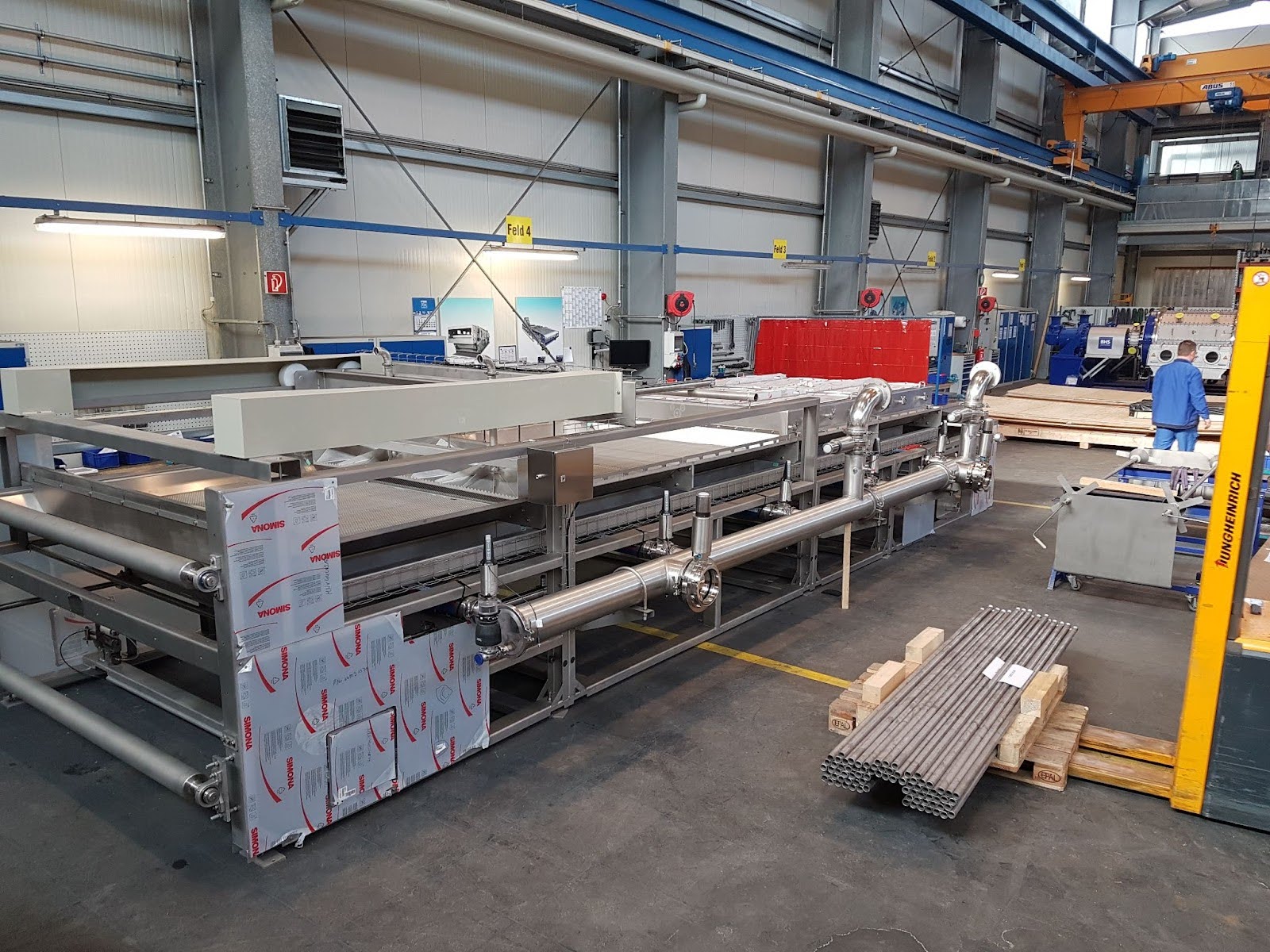
Continuous-Indexing Vacuum Belt Filter (CI-VBF)
A continuous vacuum system for high-solids slurries, up to roughly 50–55 percent solids. Fixed vacuum trays and a pneumatically indexed belt complete filtration, washing, and drying in a single pass, with plug-flow wash efficiency that keeps mother liquor and wash filtrates separate. In one documented installation, a 12 m² CI-VBF replaced a 440 m² filter press at matched throughput.
Best fit when vacuum filtration suits the slurry, wash efficiency matters, and pressure-vessel containment isn’t required.
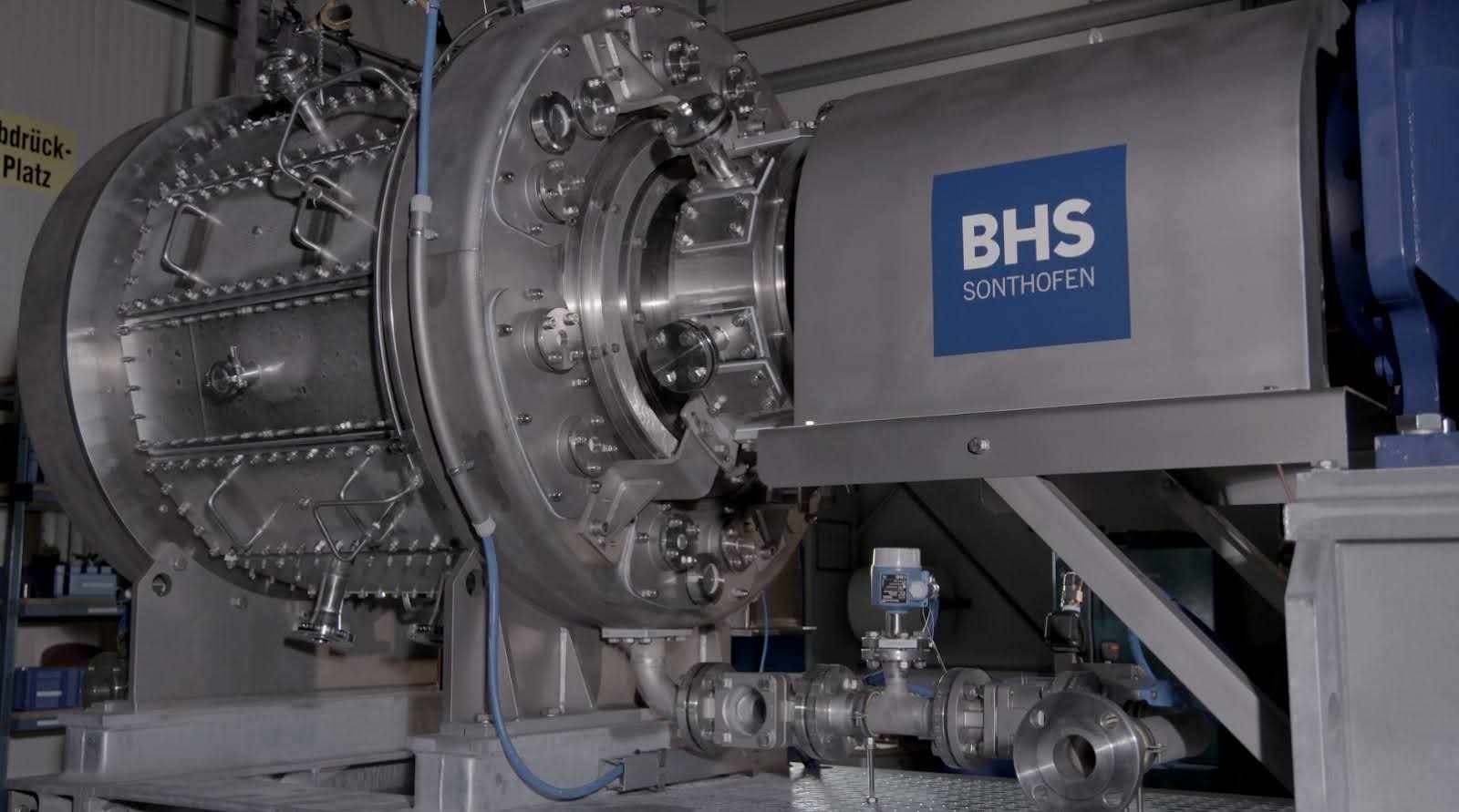
Rotary Pressure Filter (RPF)
A continuous, thin-cake pressure filter operating up to 90 psig across five to seven independently controlled zones, all within a single enclosed unit. It supports counter-current washing and solvent or gas recovery.
It’s the best fit when the slurry needs pressure-driven dewatering, containment or hazardous handling requirements are high, or solvent recovery is part of the process.
Filter Press vs. Continuous Alternatives at a Glance
| Factor | Filter Press | Vacuum Belt Filter (CI-VBF) | Rotary Pressure Filter (RPF) |
|---|---|---|---|
| Operation | Batch: fill, press, discharge in cycles | Continuous: indexed belt over fixed vacuum trays | Continuous: rotation through 5–7 enclosed zones |
| Cycle time & output | Long, variable; output arrives batch by batch | Steady, continuous output | Steady, continuous output |
| Wash efficiency | Two-sided cake compaction makes cake washing inefficient; higher wash fluid use | Single-pass plug-flow wash with high displacement efficiency. Supports counter-current washing | Single-pass plug-flow wash with high displacement efficiency. Supports counter-current washing |
| Footprint at scale | Scaling means adding plates, then units | A compact unit can match a much larger press (documented case: 12 m² CI-VBF replaced 440 m² of filter press) | Compact, multi-zone design in a single enclosed unit |
| Containment | Long plate-sealing perimeter; leak-free guarantee difficult; gas-tight housing adds cost | Enclosed hood options available | Fully enclosed, pressure-rated by design, suited to hazardous or high-value material |
| Best-fit application | Batch operations requiring low cake moisture or moderate throughput | High-solids slurries (≈50–55%) with significant cake washing requirements | Continuous production requiring pressure dewatering, high wash efficiency, or containment |
How to Know Which Replacement Fits Your Process
The only reliable way to answer that question is to test the actual process slurry. Particle size, solids concentration, cake compressibility, and wash requirements interact in ways that can’t be predicted from a data sheet.
BHS runs bench-scale and pilot-scale testing at its Charlotte, NC lab using material supplied by your team, then delivers a written test report with scale-up recommendations your team can act on. See how bench-scale filtration testing reduces capital investment risk, or learn more about BHS’s filtration pilot testing solutions.
Questions to Ask Before Replacing a Filter Press
- Has the actual process slurry been tested under vacuum and pressure filtration, or is this comparison still being made on paper?
- What does wash efficiency cost in fluid consumption, cycle time, and labor under the current filter press setup?
- What containment level does the material require: a standard shroud or a fully enclosed, pressure-rated vessel?
- Is the goal continuous output, reduced footprint, better wash performance, or some combination, and which technology actually delivers that combination?
- Can the same partner test, size, engineer, and support the replacement system, or does responsibility change hands along the way?
How BHS Supports a Filter Press Replacement
BHS approaches a filter press replacement as a testing question first and an equipment question second. That starts with bench- and pilot-scale trials on your actual process material, continues through equipment sizing and engineering based on validated results rather than assumptions, and carries through installation with U.S.-based operations support, field service, and parts, including for systems that have been running for decades.
Submit your process details through the Application Data Sheet, and BHS will follow up to discuss your process, testing options, and next steps.
Filter Press Replacement FAQ
“Belt filter press” is often used loosely. A traditional filter press is a batch, plate-and-frame pressure filter. A belt press is a different technology, two moving belts that mechanically squeeze a cake, used mainly in sludge dewatering. BHS’s Continuous-Indexing Vacuum Belt Filter (CI-VBF) is a separate continuous vacuum system that can replace filter press duty in many high-solids applications. Confirming which one a given process actually needs is a large part of getting this decision right.
It depends on how affordability is measured. A filter press can look less expensive on a capital-cost basis, but wash fluid consumption, labor, cycle-time inefficiency, and maintenance can add up on the operating side. Comparing options on total installed cost and operating cost, not capital cost alone, gives a more complete picture, and testing the actual process material is what makes that comparison meaningful rather than theoretical.
Yes. BHS runs bench-scale and pilot-scale testing on customer-supplied process material, which is designed to show how a slurry behaves under vacuum or pressure filtration before any capital is committed.
A filter press is a batch technology: it fills, presses, and discharges in cycles. The Rotary Pressure Filter (RPF) is continuous, moving slurry through multiple enclosed, independently controlled zones under pressure. The RPF is generally considered for processes that need pressure-driven dewatering with high containment or solvent-recovery requirements.
It depends on the process, the testing required, and the scope of the equipment. Discovery and bench- or pilot-scale testing typically come first, followed by equipment sizing, engineering, and installation. BHS scopes each timeline around the specific process and test program rather than a fixed default.