

How to Spec a Filtration System for a New Process Line
Filtration system specification for a new process line usually lands on a process engineer’s desk with a deadline attached and limited context on where to start. The equipment list from a capital project scope calls for a filter. What that filter needs to do, and how it should be sized, is still an open question.
Most filtration specs that underperform were not the result of a wrong equipment choice. They were built on assumptions about the process slurry instead of data collected from it. A vendor data sheet or a generic sizing calculation can suggest a starting point, but it cannot substitute for empirical measurements of how the actual slurry filters, washes, deliquors, and discharges.
This filtration equipment selection guide walks through the process characterization, testing, and technology decisions that go into a defensible filtration system specification, based on how BHS works through this process with customers designing new process lines. An underspecified or oversized system does not usually create a problem on day one. It shows up later, as downtime, rework, or a retrofit that costs far more than getting it right the first time.
Start With Process Characterization, Not Equipment Selection
The foundation of any filtration system specification is a detailed understanding of the process stream and what the plant needs from it. That starts with operating conditions: temperature, pressure, flow rate, particle size distribution, throughput, stream chemistry, and solids concentration. These variables narrow the field of appropriate filtration technologies before anyone looks at a spec sheet, and they shape which features matter once a technology is selected.
Process characterization also means understanding what sits upstream and downstream of the filter, not the filter alone. If the filter cake is headed to a dryer, a low residual moisture target matters because it reduces the heat the dryer has to supply. If the cake will be reslurried with more liquid downstream, that same moisture target may carry far less weight. The answer to why a quality requirement matters is often found in the equipment on either side of the filtration step.
A common gap in early requests is a single figure: a target number of kilograms per hour of slurry, with a request to quote a machine. That number alone is not enough to build process line filtration requirements around. Particle size, flux, particle shape, and the viscosity of the liquid phase all determine how large the machine needs to be to hit that throughput, and none of those variables are visible from a flow rate alone.
Process characterization can also shift depending on what feeds the filter. A slurry from a crystallizer or reactor still at an R&D or early scale-up stage can behave differently once that upstream step moves to pilot or production scale, even when the filtration step itself has not changed. Flagging that upstream variability early, and confirming whether the test sample reflects the most current, representative version of the process, prevents a mismatch between lab results and what shows up once the line is running.
Define the Separation Performance Targets
A Filtrate clarity matters for processes where the liquid phase is a recovered product or where carryover of fine solids affects a downstream step. Filter media selection is where this requirement gets addressed, and it is worth confirming early instead of treating media choice as an afterthought.
Wash efficiency and cake purity requirements shape which filter types are worth considering at all. Removing mother liquor or recovering solvent to a specific purity level typically calls for multi-stage or counter-current washing, and not every filtration technology supports that approach efficiently.
Downstream requirements set the residual moisture target a filter has to hit. A dryer waiting on filter cake, a packaging step with a moisture spec, or a purity requirement further down the line all translate into a specific deliquoring target, not a general goal of getting the cake as dry as possible.
Cycle time and throughput per shift determine whether the plant can meet production targets without adding shifts or redundant units. Packaging, drying, or transport equipment already committed to the line can also limit what cake form and moisture the filter is allowed to produce, so those constraints are worth confirming before the specification is finalized.
Match Filtration Technology to Process Behavior
It is worth staying open on technology selection until the process data is in hand. Unless a hard constraint rules out an approach from the start, such as a process that cannot tolerate vacuum because of volatile components, solid-liquid separation equipment selection should follow the data instead of leading it.
Cycle time pressure, labor intensity at discharge, and cake quality that varies from batch to batch are the operational signals that typically point toward a continuous system for a new process line instead of a batch unit. Continuous filtration system design also produces a steady filtrate stream, which simplifies how the rest of the line is integrated downstream. The rate at which the cake forms, the solids content of the slurry, and the speed with which the wash agent permeates the cake are additional factors that can point toward a batch or continuous filter; slurries that filter relatively quickly tend to point toward continuous filters.
Pressure differential requirements, cake dryness targets, and slurry characteristics point toward pressure or vacuum filtration. High-solids slurries suited to vacuum filtration, generally up to 50 to 55 percent solids, are strong candidates for a continuous vacuum belt filter. Applications that need higher operating pressure or a compact footprint for continuous filtration of non-abrasive slurries are where rotary pressure filter selection becomes the stronger candidate.
Candle filters and pressure plate filters fit a different set of conditions: high pressure, fully enclosed operation, and hazardous or high-value filtrates where an open filtration system would need a fully sealed housing to meet containment requirements. Candle and plate filters are also well suited to slurries with low solids concentrations and relatively slow filtration rates. Candle filters pack a large filtration surface area into a comparatively small footprint, which makes them an economical option, and the geometry of a plate filter helps maintain cake integrity throughout the operating cycle, so wash liquid displaces impurities in the cake rather than channeling through a defect.
Confirm the Spec With Laboratory Testing
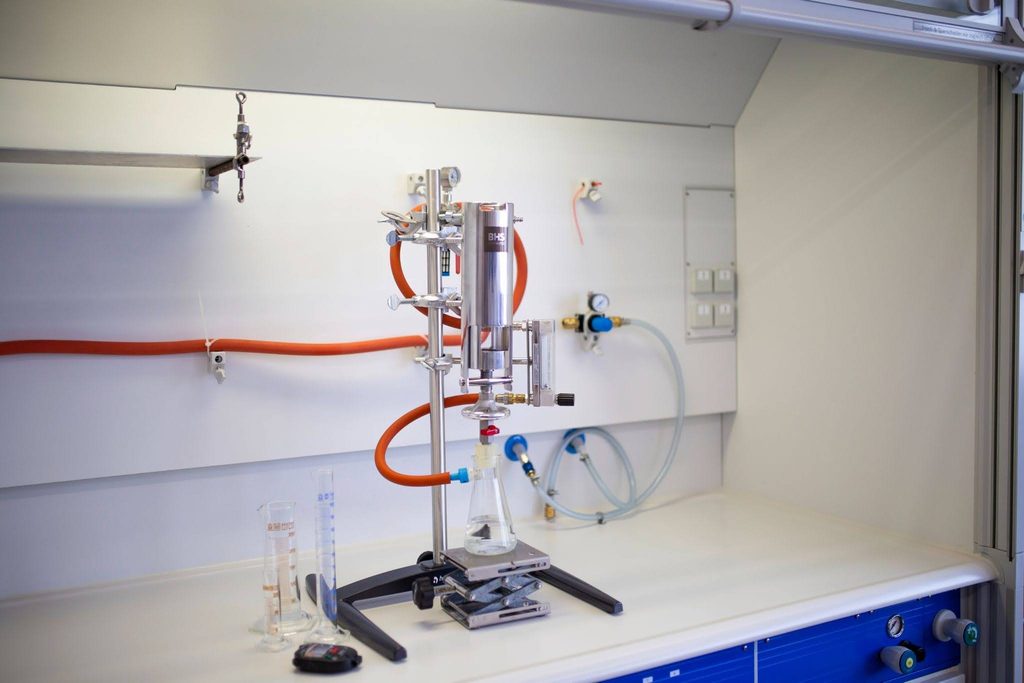
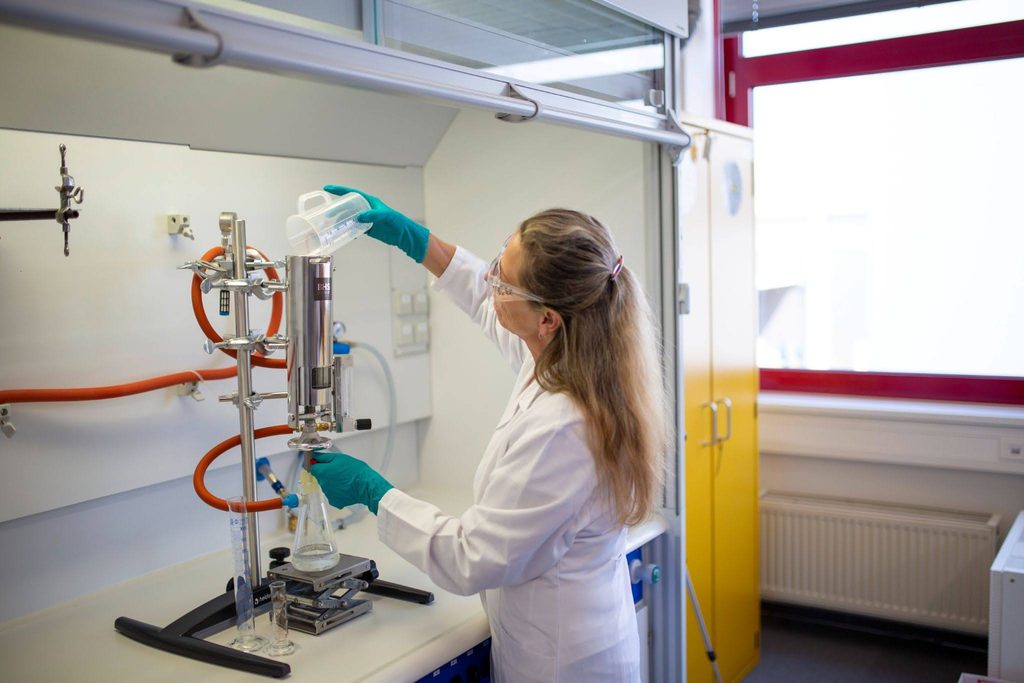
BHS-Sonthofen Inc.’s preferred method for building a filtration system specification is laboratory testing on the actual process slurry before a technology or size is proposed. Testing ensures the data behind the spec came from the material itself, not from a comparison to a similar-sounding application.
A completed test report covers more than machine size and technology selection. It also documents the optimized processing parameters behind that recommendation: cake thickness; the quantity of washing agent required to hit a purity target; the deliquoring or drying time needed to meet a residual moisture specification; the filter media selected, including whether that media tends to blind or clog over time; and any special features that improve washing efficiency or moisture reduction for that specific application.
Certain results during testing are worth treating as a signal to pause. Results that vary significantly from one trial to the next usually mean the sample was not representative of the process or that the process carries more variation than expected, either of which is worth resolving with the customer before the spec is finalized. Filtration that runs at an impractically slow rate or a cake that will not discharge cleanly from the chosen technology, such as a sticking cake on a candle filter, is also worth a second look before moving forward.
Decide Whether Pilot Testing Adds Value
Pilot testing is not strictly required to produce a specification, but it does provide added assurance that a technology will perform at scale, and it can reveal things a single lab-scale trial, typically run in well under an hour, is not well suited to catch. A full lab testing engagement usually runs multiple trials over three to five days.
Running material through a pilot unit over hours or days, instead of a single short trial, shows how much day-to-day variation exists in solids content, particle size, viscosity, or temperature, and whether the machine handles that variation without issue. Blinding of the filter media, where the cloth becomes less permeable and throughput drops over time, is also easier to observe at pilot scale simply because it takes hours of continuous operation to show up. A lab trial rarely runs long enough to reveal it.
Pilot testing can also surface problems with how wash liquid is applied to the cake. Some application methods distribute liquid well across the cake surface. Others are more localized and can damage the cake, opening a channel that the wash liquid then flows through instead of displacing the impurities it is meant to remove. That kind of problem is far easier to catch and correct at pilot scale than to discover after commissioning.
Going straight to pilot testing without a preceding lab test is the exception rather than the norm. It tends to happen when there is a strong precedent for a given technology in a similar application or when the customer already has solid in-house lab data on the slurry.
Account for Plant Integration, Utilities, and Safety Design
Footprint and layout on a new process line can rule out or favor certain filter geometries early in the design phase, before a specific model is chosen. Utility requirements, compressed air, steam, and electrical loads all need to be confirmed against what the new line can supply, not assumed from a general spec sheet.
A turnkey, skid-mounted system with integrated PLC controls reduces commissioning risk compared to specifying standalone equipment and adding controls later. Materials of construction tie back to the slurry’s corrosivity and abrasiveness, and wetted-part material selection affects both performance and lifecycle cost.
Safety deserves the same upfront attention as throughput and moisture targets. Characterizing the hazards a slurry poses, alongside its filtration behavior, determines whether the system needs features such as inerting gas to manage fire risk or static control measures for material prone to generating static electricity. Building that into the design from the start is far more straightforward than adding it after the fact.
Questions to Work Through Before Finalizing the Spec
- What is the slurry’s particle size distribution, solids loading, and viscosity across the full operating range, not just at nominal conditions, and does that data reflect the most current version of the upstream process?
- What cake moisture, filtrate clarity, cake purity, and wash efficiency does the downstream process require?
- Is this line running in batch campaigns or continuous, steady-state production, and what throughput does it need to hit?
- What footprint, utility capacity, controls integration, and hazard classification requirements exist on the new line?
- Has the slurry been tested at bench or pilot scale, or is the spec still built on assumptions and vendor averages, and how much day-to-day variation should that testing account for?
THE BHS APPROACH
BHS works through this process by evaluating the process conditions, testing history, and decision timeline behind an inquiry before any equipment is proposed. A clear process description, a representative sample, and access to whoever is making the technical decision all speed up the specification process considerably.
That evaluation is followed by bench-scale filtration testing at the BHS Charlotte, North Carolina lab or at the customer’s lab, which produces the written test report described above. A well-characterized process with existing lab data can move to a specified machine in as little as two weeks. A new process that still needs full characterization takes longer, and shipment of the finished equipment typically runs nine to ten months after the specification is finalized. The testing phase is a small fraction of the overall project timeline and not the part worth rushing.
The same team that runs the bench and pilot testing also supports scale-up, commissioning, and lifecycle service, so the specification that comes out of testing carries through to plant startup instead of changing hands partway through the project.
Rotary Pressure Filters (RPF)
The RPF is the continuous solution for pressure filtration of non-abrasive materials, well suited for process lines converting off-batch filtration or scaling up throughput without adding floor space. Its fully enclosed design also suits hazardous operations.
Continuous-Indexing Vacuum Belt Filters
Indexing belt filters suit slurries that call for vacuum filtration with multi-stage washing needs on a continuous line.
Candle Filters and Pressure Plate Filters
These fit low-concentration slurries at high-pressure, fully enclosed applications where filtrate quality or hazardous handling rules out open filtration.
Turnkey Engineered Systems and Lifecycle Support
BHS delivers skids, PLC controls, and instrumentation as a turnkey package, along with spare parts and rental options for interim capacity needs.
A Spec Built on Test Data Outlasts One Built on a Catalog Match
Process engineers who get the best long-term result treat the filtration system specification as an output of process data and testing, not an input chosen off a brochure. A mismatched spec rarely announces itself on day one. It compounds instead into higher operating costs, more frequent maintenance, and eventual retrofit spending.
Building the spec on real slurry data, characterized upstream and downstream, tested at bench scale, and validated at pilot scale where it counts, is what carries a filtration system through to a plant that runs the way the capital project review said it would.
Frequently Asked Questions
How long does it take to get a filtration system specification?
With a well-characterized process stream and existing lab data, BHS-Sonthofen Inc. can often provide a specified machine within a couple of weeks. A new process that still needs full laboratory characterization takes longer, and shipment of the finished equipment typically runs nine to ten months from a finalized specification.
Is pilot testing required before specifying a filtration system?
No. Laboratory testing is generally sufficient to build a specification. Pilot testing is optional and is most valuable for processes with meaningful day-to-day variation or where confirming wash performance and filter media life over an extended run reduces risk before capital is committed.
What information should a process engineer have ready before starting the specification process?
A description of the process upstream and downstream of the filter, a representative sample of the slurry, ideally reflecting the most current version of the process if it is still evolving, any known hazard classification, and clarity on production targets and quality requirements all help move the process forward efficiently.
Submit an Application Data Sheet or start a technical conversation with BHS-Sonthofen Inc. to begin the testing process before your next filtration system specification is finalized.