

Filter Press vs. Belt Filter Press vs. Rotary Pressure Filter: Side-by-Side Comparison
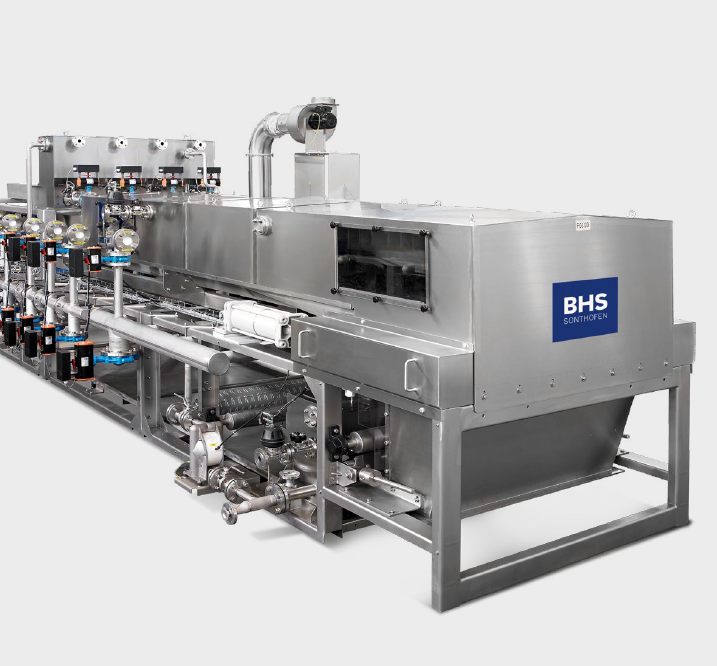
A process engineer running a filter press vs belt filter comparison usually is not doing it out of curiosity. Cycle time has stretched past what the schedule can absorb, wash cost keeps climbing, or the plate stack has grown as far as the footprint allows. At that point, the comparison stops being theoretical.
Before going further, it helps to clear up a common mix-up. This post compares three technologies: the filter press, the vacuum belt filter, and the rotary pressure filter. A belt press, the two-belt equipment used mainly in sludge and pulp dewatering, is a real piece of equipment but not one BHS offers and not part of this comparison.
None of these three technologies is universally better. Each one is built around a different way of applying force to a slurry, and each fits a different combination of slurry behavior, production schedule, and containment requirement. This post defines each technology, compares them side by side on the factors that drive a specification decision, and closes with the questions engineers should work through before choosing. Get the category wrong, not just the vendor, and the cost shows up later as wash inefficiency, a footprint that will not scale, or labor spent managing a process that should be running itself.
Getting the Terminology Right Before Comparing Technologies
Searches like “filter press vs belt filter” and “belt filter press comparison” often blend two or three different pieces of equipment into one category. Before comparing anything, it is worth defining each term on its own.
A filter press is a batch, thick-cake pressure filter built around a horizontal stack of vertical plates or membranes. It fills, presses, and discharges in a repeating cycle, and it is the baseline technology this whole comparison measures against.
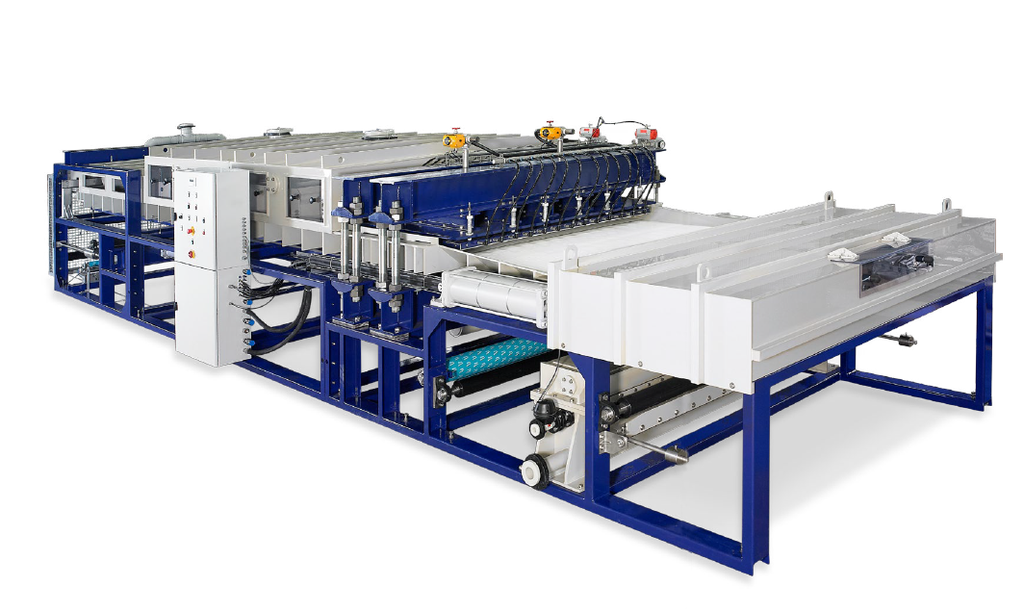
A vacuum belt filter, specifically BHS’s Continuous-Indexing Vacuum Belt Filter (CI-VBF), is a continuous vacuum filtration system that moves slurry across fixed vacuum trays on an indexed belt. It is a different technology from a belt press, which as mentioned previously, uses two moving belts to mechanically squeeze a cake and is used mainly in sludge and pulp dewatering. The distinction matters because the search terms for these two pieces of equipment overlap even though the equipment does not.
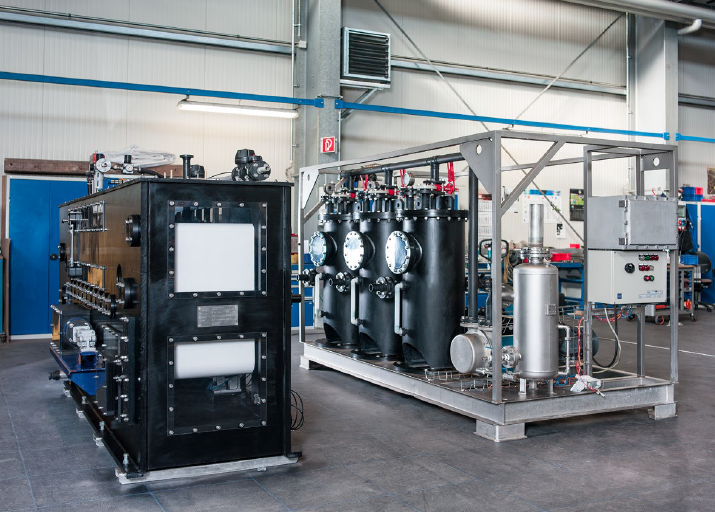
A Rotary Pressure Filter (RPF) is BHS’s continuous, thin-cake pressure filter. It operates as an enclosed, multi-zone rotary design, and it is the pressure-side continuous alternative to both the filter press and the vacuum belt filter.
How Each Technology Operates
Filter Press
A filter press runs on a batch cycle: fill, press, and discharge in sequence. Cake thickness, commonly 25 to 50 mm, drives how long each cycle takes and how clean the discharge is.
The operating logic is straightforward. Pressure forces liquid out of a solid which is retained by a polymer filter media. That origin in thick-cake dewatering still defines how the technology behaves today, even in a modern, fully automated design.
Vacuum Belt Filter (Continuous-Indexing Vacuum Belt Filter)
The CI-VBF runs continuously. A polymer filter media belt moves in short steps down the filter across fixed vacuum trays, completing filtration, washing, and drying in a single pass rather than in discrete batches.
It is built for high-solids slurries, generally ranging from 5 to 50 to 55 percent solids, where vacuum is the appropriate driving force for the separation.
Rotary Pressure Filter
The RPF advances slurry through up to seven independently controlled zones under pressure up to 90 psig. Filtration, washing, drying, all happen inside a single enclosed unit while the filter cake is able to be discharged at atmospheric pressure.
That full enclosure is what lets the RPF support containment and solvent or gas recovery in a way a filter press’s open plate stack cannot easily match.
Side-by-Side Comparison: The Factors That Drive the Decision
Once the terminology is settled, the real decision comes down to a handful of factors that show up in daily operation, not a spec sheet ranking.
Cycle time and throughput consistency separate these technologies immediately. A filter press produces output in batches, with gaps between discharges. The vacuum belt filter and the RPF both produce a steady, continuous stream, which simplifies how downstream equipment is scheduled and staffed.
Operator intervention and labor requirements follow the same pattern. A filter press, even a highly automated one, still needs periodic attention: supervising the cycle, assisting plate opening and cake discharge, inspecting cloth condition, and restarting the batch. A continuous system runs at a steady process flow, which cuts down on the routine intervention and the labor tied to repeated filtration, discharge, and restart cycles.
Wash efficiency is where the filter press runs into a structural limitation. Cake compacts on both sides of the chamber, which makes counter-current washing impractical and drives up wash fluid consumption. The vacuum belt filter’s single-pass, plug-flow wash and the RPF’s counter-current wash capability both use less fluid to hit the same purity target.
Footprint per unit of throughput favors the continuous technologies as scale increases. In one documented case, a compact CI-VBF matched the throughput of a filter press many times its size, because continuous output does not need the same margin for batch-to-batch variability that a filter press does.
Containment and hazardous material handling is a real differentiator for demanding applications. A filter press has a long plate-sealing perimeter to manage. The vacuum belt filter improves on that with enclosed hood options, and the RPF, fully enclosed by design, is built for hazardous or high-value material.
Product and cake quality consistency tends to vary plate-to-plate and even within a single plate on a filter press. A continuous system produces cake under the same conditions on every pass, which keeps quality more consistent from one unit of output to the next.
Slurry characteristics tie all of this together. Solids concentration, particle size, particle density and the appropriate driving force, vacuum or pressure, determine which of these technologies is even in the running for a given process. This is a process-fit decision, not a generic ranking of one technology over another.
| Factor | Filter Press | Vacuum Belt Filter | Rotary Pressure Filter |
| Operation | Batch | Continuous | Continuous |
| Driving Force | Pressure | Vacuum | Pressure |
| Cake Thickness | Thick | Thin – Medium | Wide Range |
| Ability to Handle Process Variations | Poor – Moderate | Excellent | Moderate |
| Labor & Operator Involvement | Higher (cycle supervision, discharge) | Lower (steady process flow) | Lower (steady process flow) |
| Washing | Moderate | Excellent | Excellent |
| Containment | Moderate | Good | Excellent |
| Throughput Consistency | Cyclic | Continuous | Continuous |
Which Technology Fits Which Process
A filter press remains the right call for aqueous suspensions, a schedule that can accommodate batch operation, straightforward wash requirements, and standard containment needs. There is nothing wrong with specifying one when the process fits that profile.
A vacuum belt filter is the better continuous filter press replacement for high-solids slurries suited to vacuum filtration, where plug-flow wash efficiency and lower labor demands matter and pressure-vessel containment is not required.
A rotary pressure filter is the better filter press alternative for slurries that need pressure-driven dewatering, high containment or hazardous handling requirements, or counter-current washing and solvent recovery.
“Filter press alternative” and “continuous filter press replacement” are not interchangeable terms with one universal answer. The right technology depends on how the slurry behaves under real conditions and confirmed through testing.
Questions to Work Through Before Choosing Between These Technologies
1. Is the current or planned production schedule realistically compatible with batch operation, or is cycle time already creating a bottleneck?
2. How much does wash efficiency, wash fluid consumption, and the labor tied to managing wash cycles factor into the total operating cost of this process?
3. What containment level does the material require, and can that be met with a standard shroud, or does it call for a fully enclosed, pressure-rated vessel?
4. What is the slurry’s solids concentration, and does it fall within a range suited to vacuum filtration, or does it call for pressure-driven dewatering?
5. Has the slurry been tested at bench or pilot scale under each candidate technology’s operating conditions, or is this comparison still being made on paper?
How BHS-Sonthofen Inc. Approaches This Comparison
BHS does not manufacture filter presses. Its role in this comparison is to help engineers determine, with process-specific data, when a continuous system outperforms a filter press for their application.
Continuous-Indexing Vacuum Belt Filter
The CI-VBF is BHS’s answer for high-solids, vacuum-appropriate slurries moving off batch filter press operation and looking for plug-flow wash performance along with the lower labor demands that come with continuous operation.
Rotary Pressure Filter
The RPF is BHS’s answer for pressure-driven, high-containment, or solvent-recovery-critical processes where a filter press’s open design or a vacuum system’s driving force falls short.
Testing determines the fit. BHS’s Charlotte-based lab runs bench-scale or pilot testing on the actual slurry to confirm which of these two continuous technologies, if either, is the right replacement before any equipment gets specified.
The Comparison That Matters Is the One Run on Your Slurry
Filter press vs. vacuum belt filter vs. rotary pressure filter is a real, answerable comparison, but the winner is decided by how the actual slurry filters, washes, and dries, not by a generic ranking of the three technologies.
Specifying based on familiarity instead of tested performance carries wash inefficiency, footprint mismatch, and added labor forward for the life of the equipment. Testing the slurry first is what keeps that cost from compounding.
Talk with BHS engineers about your specific filtration challenge. Bring the slurry data you have, and treat the conversation as the next diagnostic step toward the right technology, not a sales pitch.