

Filter Press Washing Efficiency: Why Your Wash Cycle Costs More Than You Think
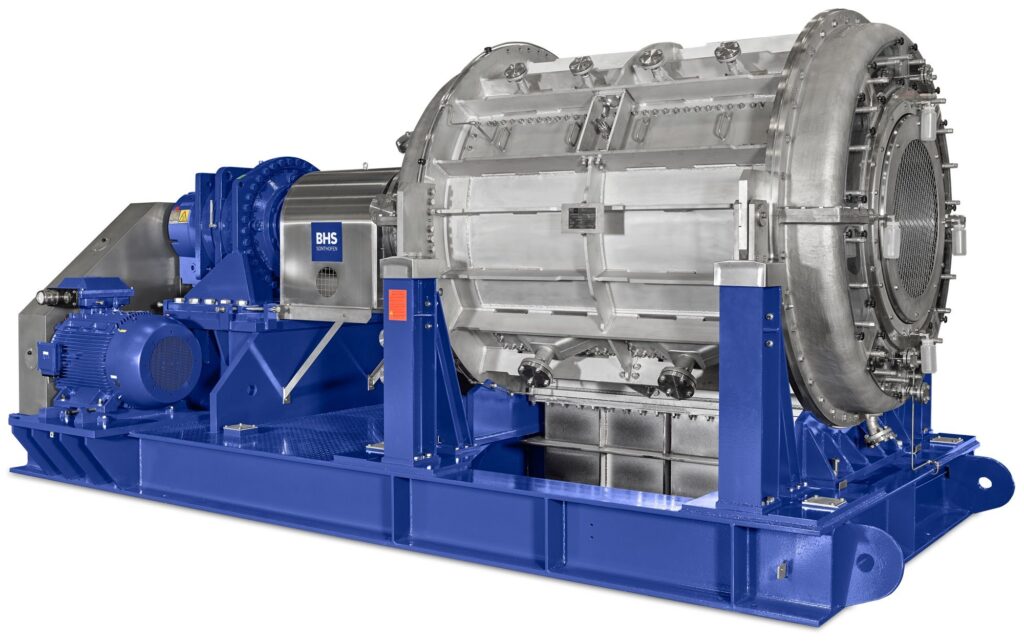
Filter press washing efficiency rarely shows up on a capital request. The purchase price does, along with rated throughput and filter area. That price is only the first number on the ledger, though. Once the press is running, wash cycle time and wash water consumption are where a large share of the ongoing cost lives, batch after batch, for the life of the equipment.
Most plants evaluate a filter press on capital cost and throughput and never audit wash performance as its own line item. For products with tight purity specifications, washing can be one of the largest recurring operating costs tied to the equipment. It is also one of the hardest to see, because it is spread across water, utilities, wastewater handling, and operator time.
The cause is structural. Filter press cakes form on both sides of each chamber, and that geometry shapes how wash liquid moves through the cake, how much of it is needed, and how long the wash takes. This post walks through why filter press cake washing is inherently less efficient, what that inefficiency costs in operating terms, and the questions process engineers should ask when they weigh total operating cost alongside purchase price.
Why Filter Press Cake Washing Is Structurally Inefficient
The limitations of filter press cake washing come from how the cake forms inside the chamber. Careful operation can narrow them, but it cannot remove them. Three mechanisms work together to drive wash volume and wash time up.
Two-Sided Cake Formation
In a recessed-chamber or plate-and-frame press, cake builds from both cloth faces toward the center of each chamber. The outer layers against the cloth compact first and most tightly. The center forms last and stays softer and less uniform.
When the wash begins, wash liquid has to travel in the opposite direction of the original filtrate flow, through material it did not originally pass through, and across both compacted layers. That path typically calls for higher pressure than single-sided filtration and gives the wash liquid every opportunity to take the easy route.
Channeling
Uneven cake density creates paths of least resistance. Wash liquid follows those paths and moves around dense zones instead of through them. The result is pockets of retained mother liquor and dissolved impurities that the wash never reaches, even when the total wash volume looks more than sufficient on paper.
Back-Mixing
In an ideal displacement wash, wash liquid pushes mother liquor out ahead of it in a clean front, often described as plug flow. In a two-sided filter press cake, wash liquid tends to mix with the retained mother liquor instead of displacing it. Each gallon of wash water then removes less impurity than it would in a plug-flow wash, so more wash medis is needed to reach the same purity.
Why Countercurrent Washing Is Harder to Achieve in a Filter Press
Countercurrent washing applies fresh wash liquid to the cleanest cake and reuses the partially spent wash filtrate on earlier, dirtier stages. It is standard practice in continuous single-sided systems because it gets more purification out of every unit of wash fluid.
Multi-stage and sequential washing strategies can be implemented in filter presses. True countercurrent washing, however, is inherently more difficult to achieve than in continuous single-sided filtration systems because of the geometry of the cake and the flow path through it.
Put together, these mechanisms produce a predictable response on the plant floor. To reach a target purity despite channeling and back-mixing, operators compensate by washing longer and using more wash fluid. That overwashing is the mechanical root of the costs covered in the next section.
What Filter Press Wash Water Consumption Costs in Operating Terms
Wash inefficiency turns into an operating cost through several channels, and each one repeats with every batch. The useful way to look at them is as cost per batch and cost over the service life of the equipment.
Wash Water Volume
Because of the two-sided cake and the limits on countercurrent washing, filter press wash cycles can require three to four times the wash fluid of single-sided continuous alternatives to reach a comparable purity target. The exact multiplier depends on the product, the impurity being removed, and the purity specification. The direction is consistent: more wash fluid per unit of product.
Cycle Time
For difficult or critical products, wash cycles of eight hours or more are not uncommon, and they follow three to four hours of dewatering. During that time the press is occupied but not producing new cake. Every hour spent washing is an hour the equipment is unavailable for the next batch, which can hold effective throughput well below what the installed filter area suggests.
Water Sourcing, Treatment, and Wastewater
Wash water carries a cost before and after it touches the cake. It has to be sourced, and depending on the process, it may need to be heated or treated first. Afterward, it has to be disposed of or reclaimed.
Extended wash cycles can increase water consumption and stretch wastewater processing capacity in some plants to the point where wastewater handling becomes a constraint on production. Longer cycles also tie up utilities such as steam and compressed air that could otherwise support other lines. None of these costs appear on the equipment’s price tag.
Labor and Operator Involvement
Filter presses require periodic operator involvement for plate opening, cake discharge, cloth inspection, and management of batch cycles, even in highly automated installations. Long wash cycles stretch each batch further and add operator hours per unit of product.
Continuous technologies such as vacuum belt filters and rotary pressure filters operate with a steady process flow. That can reduce routine intervention and minimize the labor associated with repeated filtration, discharge, and restart cycles.
Filter Press Affordability Is an Operating Cost Question
Filter press affordability is usually judged at the purchase order, which is the moment the cost is easiest to see and least representative of what the equipment will cost to own. Capital cost is a single line item paid once. Wash water, cycle time, utilities, filter media and labor are recurring costs that accumulate over months and years of production.
A filter press with a lower purchase price can carry a higher total cost of ownership once wash inefficiency is factored in across its service life. How wide that gap gets depends heavily on the product. For a material that washes easily against a loose purity specification, it may be small. For a fine chemical or API intermediate with tight impurity limits, washing can become one of the largest costs of running the equipment.
A more useful basis for comparison is operating cost per batch or per unit of product. That figure captures what the purchase price leaves out, and it gives process engineers and procurement teams common ground when they compare a filter press against continuous alternatives.
What Efficient Cake Washing Looks Like, and Why Geometry Is the Deciding Factor
Cake washing efficiency improves most when the geometry of the cake changes. When cake forms on one side only, wash liquid travels in a single, predictable direction, from the cake surface through the filter medium, without having to work its way back through compacted material.
Plug-Flow Washing in Continuous, Zoned Systems
Continuous systems such as a rotary pressure filter or a continuous-indexing vacuum belt filter separate filtration, washing, and drying into distinct zones. Wash liquid is applied to a thin, uniformly formed cake, where it can displace mother liquor in a controlled front with far less opportunity to channel or back-mix.
Countercurrent Washing on a Single-Sided Cake
Single-sided, continuous designs are also well suited to countercurrent washing. Filtrate from later wash stages can be recovered and reused on earlier ones, so fresh wash liquid is spent where it is the most effective. This is the mechanism that is hardest to replicate in a two-sided filter press cake.
For an equivalent purity target, this approach can reduce wash water consumption and cycle time. The size of the improvement depends on the slurry, the impurity profile, and the wash specification, which is why it has to be measured on the process material before it is projected onto a plant.
Questions Worth Asking Before You Accept Your Current Wash Cycle as Normal
A wash cycle that has run the same way for years can start to look like a fixed property of the process. These five questions help test whether it is.
- What is our current wash water consumption per batch, and how does it compare to the theoretical single-pass wash requirement for this cake?
- How much of the total cycle time is dewatering versus washing, and has that ratio been benchmarked against alternative technologies?
- Are we over-washing to compensate for channeling or uneven cake density, and would our current process data show us if we were?
- What do wash water, utility, filter media and labor costs look like annualized across the equipment’s service life, rather than per batch?
- Has this process ever been evaluated on a single-sided, continuous platform to benchmark wash efficiency against the current filter press?
How BHS Approaches Wash Efficiency
BHS starts by measuring wash performance on the customer’s own material before recommending any change in technology. The first step is quantifying what the current wash requires. The equipment conversation follows the data.
Bench-Scale Testing to Quantify Wash Efficiency
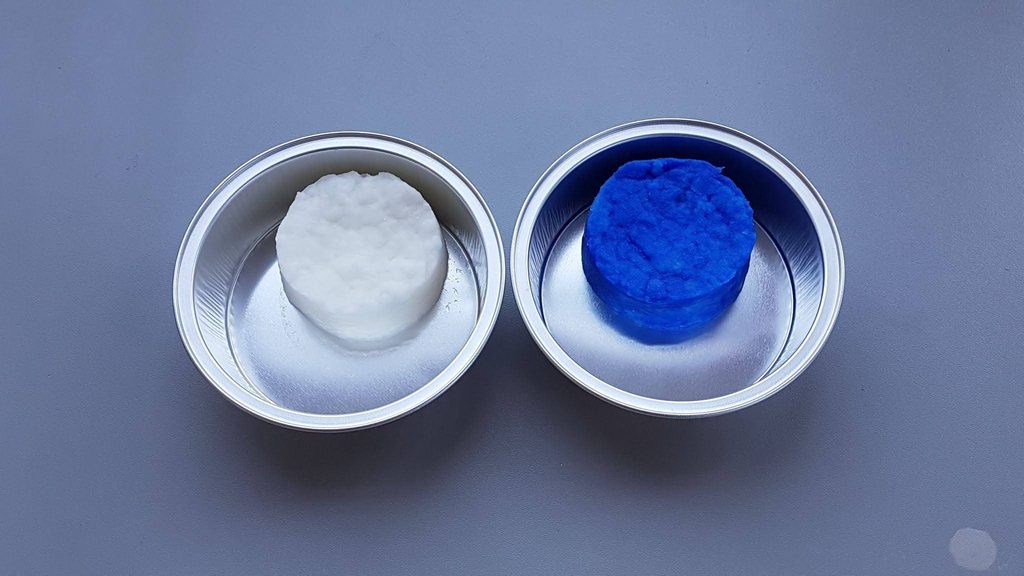
At its Charlotte, NC laboratory, BHS can test a customer’s process slurry to measure the wash ratios needed to reach a target purity, along with cake formation, dewatering, and drying behavior. Results are documented in a written test report with scale-up recommendations, so any comparison between the existing press and an alternative rests on measured data instead of assumptions.
Rotary Pressure Filter (RPF)
The BHS Rotary Pressure Filter forms a thin cake continuously and moves it through independently controlled process zones, typically five to seven, for filtration, washing, drying, and discharge within a single enclosed unit. It supports both positive displacement and countercurrent washing, and solvent and gas streams can be recovered and recirculated. For suitable applications, this can reduce wash water consumption and cycle time compared with a filter press.
Continuous-Indexing Vacuum Belt Filter (CI-VBF)
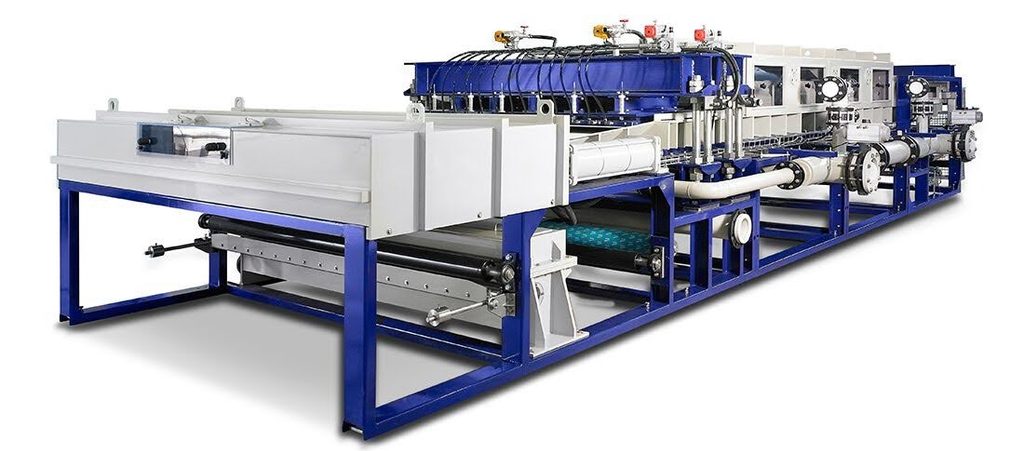
For high-solids slurries suited to vacuum filtration, the CI-VBF uses fixed vacuum trays and a pneumatically indexed belt to form, wash, and dry cake in a single pass. Its plug-flow wash is designed for high displacement efficiency, and mother liquor and wash filtrates can be recovered separately, which can simplify solvent recovery and downstream wastewater handling.
The Wash Cycle Is Where Filter Press Operating Costs Hide
Labor is the cost everyone sees. It shows up on shift schedules and timesheets, and it gets scrutinized. Wash cost is easier to miss because it is spread across water, utilities, wastewater capacity, and the hours a press spends occupied without producing. Both grow with every batch, and both grow faster when wash cycles run long.
Many washing challenges are treated as operating problems that can be solved with longer wash cycles or additional wash fluid. The underlying limitation is often geometric. The way cake forms within the filtration system determines how effectively wash liquid can contact and displace retained mother liquor, and extra wash time does not change that geometry.
As purity requirements tighten or throughput demands grow, that limitation can compound and widen the operating cost gap over time. The wash cycle is paid for on every batch for the full service life of the equipment, which makes it the number worth measuring first.
If your wash cycle has become the longest step in your filtration process, request bench-scale testing with BHS to quantify your wash efficiency on your own slurry, or submit an Application Data Sheet to start the technical conversation.