

Driving Down OPEX: How Belt Filters Provide Automated Continuous Filtration in Rare Earth Refining
The Role of Filtration in Rare Earth Refining
The refining of rare earth elements (REEs) is one of the most technically demanding processes in the critical minerals supply chain. Each stage, whether leaching ores in strong acids or selectively precipitating individual elements, relies on solid-liquid separation to ensure product purity and process efficiency.
Two factors make separation particularly challenging:
- Corrosive Leachates: The acidic or saline environments required to dissolve and separate REEs are harsh on conventional equipment.
- Low-Flow Precipitation Streams: As rare earths are selectively removed in successive steps, stream volumes become progressively smaller, but still demand consistent and precise washing.
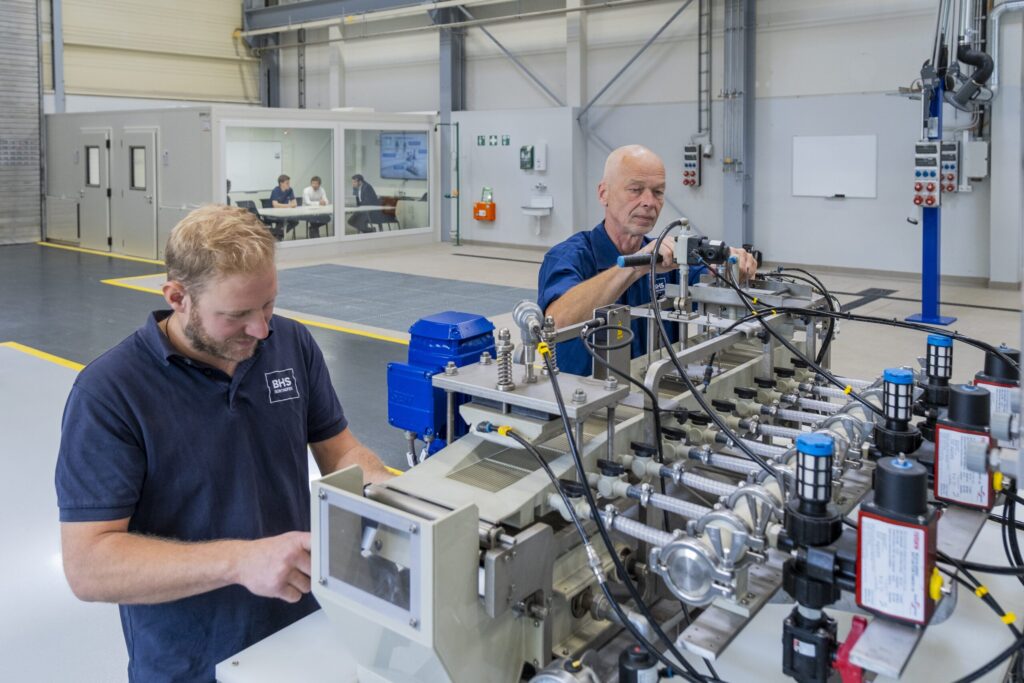
The BHS Indexing Vacuum Belt Filter (IVBF) addresses these challenges head-on, delivering continuous, efficient, and hands-free solid-liquid separations that help operators scale rare earth refining sustainably and cost-effectively.
Continuous, Efficient Solid-Liquid Separation
In rare earth refining, multiple slurries are generated during leaching and precipitation steps. Each requires separation of solids from liquids to move the process forward.
BHS IVBFs provide fully automated, continuous filtration:
- Solids are discharged directly into calcination furnaces or bulk bags, ready for the next stage of processing.
- Filtrate is routed to effluent tanks for treatment or recycling.
This seamless integration enables reliable processing across multiple low-flow, high-value streams, a critical factor in ensuring recovery rates and economic viability in rare earth refining.
Water Savings by Design
Plug-Flow and Displacement Washing
Filter presses and rubber belt filters often suffer from channeling, which allows wash fluid to bypass parts of the cake, leaving impurities behind. The BHS IVBF maintains uniform plug-flow washing, ensuring impurities are efficiently displaced for high-purity outputs.
Countercurrent Washing
By enabling true countercurrent flow, BHS filters reduce wash water consumption by 30–50% compared to conventional co-current systems.
Intermittent Cloth Washing
Because of the indexing motion, cloth wash sprays are only activated during belt advancement. This minimizes wash fluid use and reduces cloth wear, extending service life and lowering operating costs.
Recycling Streams & Stationary Tray Design
- Belt wash water can be recycled as cake wash water.
- Closed-loop vacuum pump systems with heat exchangers further reduce seal water requirements.
- Stationary trays eliminate glide belts and the need for continuous seal water (a major drawback of rubber belt designs).
Together, these features deliver significant water conservation, lower effluent volumes, and reduced utility costs, all while maintaining high washing quality.
Chemical Compatibility with Polypropylene Construction
Resistance to Acids and Salts
BHS IVBFs are constructed with polypropylene trays, channels, and collection systems, making them resistant to the corrosive acids and salts typical of rare earth refining.
Low Maintenance and Contamination Risk
Polypropylene’s resistance to scaling and chemical attack minimizes downtime and reduces maintenance requirements. It also prevents metal contamination that could compromise the purity of high-value rare earth products.
Cost-Effective and Durable
Compared to specialty alloys, polypropylene offers a lightweight, durable, and more cost-effective option—providing long service life with full chemical compatibility.
Handling Low-Flow, High-Value Streams
Each precipitation stage in rare earth refining produces progressively smaller streams that still require precise solid-liquid separation.
BHS IVBFs can be configured with production areas as small as 10 ft², enabling efficient processing of these low-flow streams while maintaining full automation and controlled cake washing. This flexibility makes the system highly adaptable across all stages of REE refining.
Operational Advantages of Rare Earth Refining
Beyond technical performance, BHS Indexing Vacuum Belt Filters offer operational benefits that directly support plant efficiency:
- Minimal Operator Involvement: Continuous, automated design reduces labor requirements and operator exposure to hazardous environments.
- Quick Restart Capability: Systems can restart rapidly after short or extended shutdowns, improving uptime.
- Efficient Water & Effluent Management: Closed-loop systems reduce water demand and effluent volumes, supporting sustainability in water-stressed regions.
- Consistent Product Quality: Precise moisture control optimizes solids for downstream calcination, ensuring reliable product performance.
In the demanding environment of rare earth refining, where purity, efficiency, and sustainability must all align, the BHS Indexing Vacuum Belt Filter delivers a proven solution. By combining continuous operation, superior cake washing, water efficiency, and chemical resistance, BHS systems reduce operating costs, conserve resources, and ensure the high-purity outputs needed for downstream rare earth applications.
Contact BHS Filtration to discuss solutions for your REE processing facility.