

Filtration Pilot Testing: The BHS-Sonthofen Inc. Application Development Process
Some projects start with a spec sheet. The best ones start with a conversation.
A process engineer calls because a filtration step has become a bottleneck. Maybe the product is being lost to the filtrate. Maybe cake washing is inconsistent. Maybe moisture targets are creeping up, pushing more load onto drying and raising energy costs. Or maybe there’s a brand-new product moving from the lab into commercial production, exciting on paper but full of unknowns once the slurry hits a filter. That’s the exact problem filtration pilot testing is designed to solve, before a single piece of equipment is specified.
This is where BHS-Sonthofen Inc. enters the story. Not as a vendor offering a single machine, but as a process partner that helps customers take something uncertain and turn it into something repeatable, reliable, and scalable.
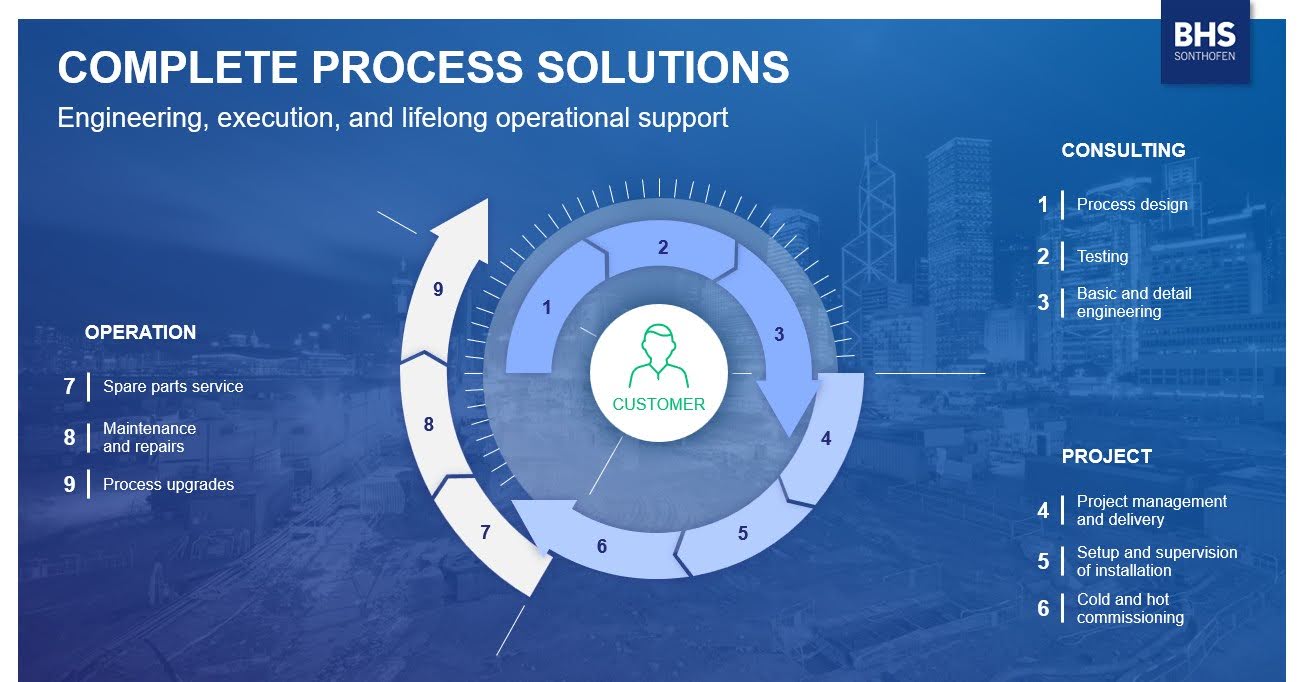
For more than 65 years, BHS has been built around one idea: filtration and separation aren’t just equipment decisions. They’re processing decisions. And if you want a system that performs in full-scale operation, not just in theory, you need to prove it step by step. That’s why the BHS application development process is intentionally designed to move from lab to plant through a structured pathway: application development, bench validation, filtration pilot testing, and finally full-scale design and long-term support.
Because in the real world, confidence doesn’t come from assumptions. It comes from results.
Where the BHS process really begins
Every application has a personality. Some slurries behave predictably. Others don’t. Some cakes form quickly, but blind media do over time. Others drain well initially but compress under pressure and trap moisture. Crystal structures can shear. Fine particles can slip through. Filtrate clarity that looks acceptable in a small test can become a costly problem when you’re running continuously at production rates.
The “right” filtration solution depends on what matters most in the process: throughput, washing efficiency, dryness, product recovery, containment, solvent handling, downstream drying capacity, and operator burden. BHS teams know that those priorities change from plant to plant and product to product.
The first stage of the application development process is never a hard sell toward one specific machine. It’s discovery. It’s understanding what the customer is trying to achieve, what they’re running today, and where the pain truly lives. Sometimes the challenge is obvious. Sometimes it takes a few careful questions to uncover what’s really happening, the same discovery step that shapes every filtration pilot testing program.
That early stage is also where long-term trust starts forming, because customers quickly realize BHS is as interested in the process outcome as they are in the equipment selection.
Why testing is the difference between “should work” and “will work.”
In filtration, scale has a way of exposing assumptions.
A material that filters well in a small funnel test might behave differently once you apply realistic pressures or try to wash a thicker cake. Likewise, a cake that appears easy to discharge in short trials can become stubborn and inconsistent after an extended run time. Even subtle shifts, like temperature swings or viscosity changes, can reshape performance when the process moves into the plant.
This is why BHS puts so much weight behind validation. Rather than jumping straight to a recommended technology, BHS supports customers through testing designed to answer the most important question in any CAPEX decision:
Will this work reliably in production?
Bench-scale testing often comes first. It’s the moment where unknowns become measurable. where cake formation, media behavior, washing response, filtrate clarity, and dewatering performance begin to tell the truth. These early results don’t just confirm feasibility; they create the foundation for the next stage: filtration pilot testing.
And this is the stage customers tend to remember, because it’s where the project shifts from “we think” to “we know.”
Filtration pilot testing: where confidence is built
If bench-scale work is the compass, filtration pilot testing is the map.
Pilot trials are designed to recreate real operating conditions and capture the performance characteristics that matter at full scale: how fast the system runs, how cleanly the cake washes, how dry it can get, how consistently it discharges, how stable it is across cycles, and how reliably it performs when run like production, not like a one-off demo.
This stage matters because filtration isn’t just about separating solids from liquids. It’s about what happens next. A small improvement in cake moisture can reduce dryer load dramatically. Better washing performance can protect purity and reduce solvent use. Improved solids capture can eliminate yield loss that quietly compounds over months.
Pilot testing allows those realities to be validated before the plant commits to final equipment sizing and installation. It reduces scale-up risk, strengthens internal alignment across engineering and operations, and gives decision-makers something every team wants before they invest: proof.
And for BHS, pilot testing is not a checkbox. It’s a core part of how we work.
The advantage of a portfolio built for real processes
One reason BHS customers value this development approach is because it’s not constrained by a single product line.
BHS supports a comprehensive equipment portfolio across solid-liquid separation and drying. That includes filtration solutions that are batch and continuous, pressure and vacuum, along with horizontal and vertical dryers. In other words, BHS has the ability to shape a solution around the application, rather than forcing the application to fit the equipment.
That flexibility becomes especially important during filtration pilot testing and scale-up because results often reveal what the process truly needs. Sometimes the answer is continuous operation for stability and throughput. Sometimes the best fit is pressure-based filtration for enclosed handling and dryness. Sometimes vacuum filtration provides the balance of washing and simplicity. Sometimes the downstream drying requirement changes the “best” filtration strategy entirely.
This is where process engineering matters. BHS isn’t only selecting a machine; they’re helping customers select a path to reliable production.
From pilot to production: scaling what’s proven
After filtration pilot testing, the project becomes far more straightforward, because the “unknowns” have been reduced.
With validated results, BHS can properly size and engineer equipment based on real performance data, not theoretical estimates. That means the last system meets the targets that matter most: throughput, washing performance, moisture content, solids capture, and operating stability.
This step is also where BHS acts as a consulting partner, ensuring the system is not only correctly designed but also practically integrated into the customer’s plant environment, accounting for upstream variability, downstream constraints, utilities, and day-to-day operational realities.
What customers appreciate at this stage is that the decisions feel grounded. Less debate. Less guesswork. More clarity.
Support that doesn’t end after startup
For many manufacturers, the relationship ends once the system is running.
For BHS, that’s often where the long-term relationship begins.
Customers choose BHS in part because of post-sale support that’s local, technical, and built for the long game. BHS maintains U.S.-based operations support with dedicated technical help and field service, and they’re known for supplying parts for equipment that’s been installed for decades, including systems operating for 50+ years.
That matters because filtration systems aren’t short-term assets. When engineered correctly, they become part of the plant’s backbone. And when operational challenges arise—as they inevitably do—having a partner that understands both the equipment and the process is the difference between downtime and continuity.
This long-term support isn’t a side offering. It’s part of why BHS has remained a stable organization for over 65 years, delivering practical, real-world solutions across industries and applications.
Why customers rely on BHS
If you ask customers why they choose BHS, they may mention the portfolio. They may mention testing. They may point to engineering expertise.
But the deeper answer is usually simpler:
BHS reduces risk.
They reduce the risk of buying equipment that’s improperly sized. They reduce the risk of performance issues that only appear after scale-up. They reduce the risk of making a decision based on assumptions rather than data. And they reduce the risk of being left on your own after startup.
When a filtration project is successful, it’s not because a machine arrived. It’s because the process was understood, validated, and engineered intentionally, from lab to plant.
That’s what the BHS application development process is designed to do. This is the core value of filtration pilot testing; turning assumptions into evidence before capital is committed.
The bottom line
BHS-Sonthofen Inc. is more than an equipment manufacturer. We are a process partner with the testing capabilities, engineering expertise, and long-term support needed to help customers move confidently from early-stage uncertainty to full-scale operations.
By focusing on application development, bench validation, and filtration pilot testing, BHS helps customers select the right technology, properly size it, and deploy it with reduced risk so the system performs reliably not only at startup but for years to come.
And in filtration, that’s what matters most.